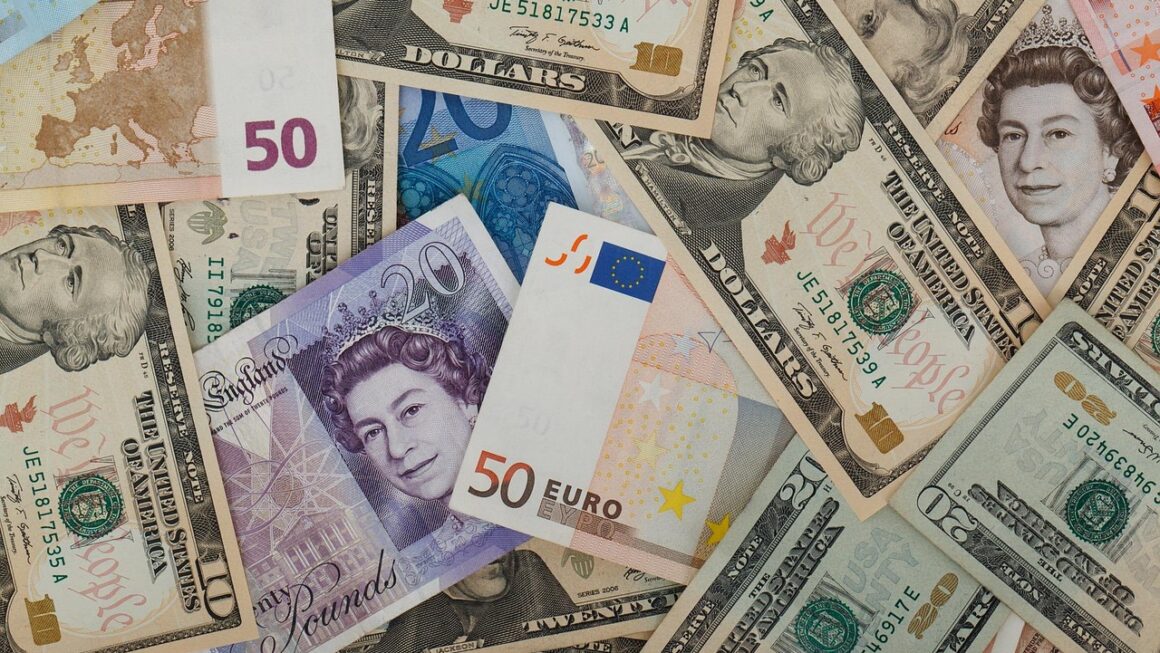
In our increasingly interconnected world, where goods, services, and capital flow seamlessly across borders, businesses and investors alike face a powerful yet often underestimated force: currency risk. This invisible current, driven by the constant ebb and flow of global exchange rates, can significantly impact profitability, asset values, and even strategic decisions. Understanding and effectively managing this risk isn’t just a best practice; it’s a fundamental requirement for navigating the complexities of the international marketplace.
## What is Currency Risk? Understanding the Basics
Currency risk, also known as foreign exchange risk or FX risk, refers to the potential financial loss that an international business or investor may suffer due to adverse movements in exchange rates. When a transaction, asset, or liability is denominated in a foreign currency, its value in the domestic currency can change unexpectedly, leading to gains or losses.
### Definition and Types of Exposure
Currency risk manifests in various forms, each impacting different aspects of a business’s operations and financial health:
- Transaction Exposure: This is the most direct and common type, arising from contractual obligations (receivables or payables) denominated in a foreign currency. For example, a U.S. company that owes euros to a European supplier in 60 days faces transaction exposure. If the euro strengthens against the dollar during that period, the dollar cost of the payment will increase.
- Translation Exposure: Also known as accounting exposure, this risk affects multinational corporations that consolidate financial statements of foreign subsidiaries. When foreign assets, liabilities, revenues, and expenses are translated into the parent company’s home currency for reporting purposes, changes in exchange rates can alter the reported financial position and performance, even if there’s no actual cash flow impact.
- Economic Exposure (Operating Exposure): This is the most subtle and long-term form of currency risk. It refers to the extent to which a company’s future international earnings and cash flows, and ultimately its market value, can be affected by unexpected exchange rate fluctuations. It impacts competitiveness, sales volume, production costs, and pricing strategies in foreign markets.
### Why Currency Fluctuations Occur
Exchange rates are dynamic, influenced by a multitude of economic, political, and psychological factors. Key drivers include:
- Interest Rate Differentials: Countries with higher interest rates tend to attract foreign investment, increasing demand for their currency.
- Inflation Rates: Higher inflation typically leads to a depreciation of a country’s currency relative to those with lower inflation.
- Political Stability and Economic Performance: A stable political environment and robust economic growth attract investment, strengthening the currency.
- Current Account Deficits/Surpluses: A persistent current account deficit (importing more than exporting) can weaken a currency as it implies higher demand for foreign currency.
- Public Debt: High levels of government debt can signal economic instability, potentially leading to currency depreciation.
- Market Speculation: Large-scale buying or selling of currencies by traders based on anticipated future movements can create significant shifts.
## Who is Affected by Currency Risk?
Currency risk is not an abstract concept; it has tangible impacts across a broad spectrum of economic participants, from multinational conglomerates to individual travelers.
### Businesses Engaged in International Trade
Any company that conducts business across borders will inevitably encounter currency risk. The specific impact depends on their role:
- Importers: Companies that purchase goods or services from foreign countries face increased costs if their domestic currency depreciates against the currency of their supplier. For example, a U.S. electronics retailer importing components from Japan will find their costs rise if the Japanese Yen strengthens against the U.S. Dollar, potentially eroding profit margins or forcing price increases for consumers.
- Exporters: Conversely, businesses selling products or services internationally may see their revenues decline if the foreign currency in which they invoice depreciates against their home currency. A German machinery manufacturer selling to the U.S. market would realize fewer Euros from their Dollar-denominated sales if the USD weakens against the EUR.
- Multinational Corporations (MNCs): These entities face comprehensive currency risk, impacting their consolidated financial statements, cross-border intercompany loans, and the profitability of foreign subsidiaries.
### Investors and Individuals
Currency risk extends beyond corporate balance sheets, affecting personal finances and investment portfolios:
- Portfolio Investors: Individuals or institutions investing in foreign stocks, bonds, or real estate are exposed to currency risk. Even if a foreign asset performs well in its local currency, a depreciation of that currency against the investor’s home currency can diminish or even erase returns when repatriated.
- Tourists/Travelers: The purchasing power of your money abroad is directly affected by exchange rates. A weakening of your home currency means your trip will be more expensive.
- Remittances: Individuals sending or receiving money internationally for family support, education, or other purposes are sensitive to exchange rate fluctuations, which determine the ultimate value received.
## The Tangible Impact of Currency Risk: Real-World Scenarios
To truly grasp the significance of currency risk, it’s helpful to consider practical examples where its effects are clearly demonstrated.
### Case Study: An Importer’s Dilemma
Consider “Global Gadgets Inc.”, a U.S. company that imports high-tech components from South Korea. On January 1st, Global Gadgets places an order for 100,000,000 Korean Won (KRW) worth of components, with payment due in 90 days. On the order date, the exchange rate is 1 USD = 1,200 KRW, meaning the order costs Global Gadgets approximately $83,333 USD.
By March 31st, when payment is due, the KRW has strengthened significantly against the USD, with the new exchange rate being 1 USD = 1,100 KRW. Now, to purchase 100,000,000 KRW, Global Gadgets needs approximately $90,909 USD.
The Impact: A sudden increase of $7,576 USD (over 9%) in their cost of goods sold, solely due to currency movement. This unexpected expense directly reduces profit margins, potentially turning a profitable transaction into a loss if not managed.
### Case Study: An Exporter’s Challenge
Now, let’s look at “European Elegance Textiles”, a French company that exports luxury fabrics to the United States. They secure an order for $500,000 USD, with payment expected in 60 days. On the contract date, the exchange rate is 1 EUR = 1.10 USD, meaning they anticipate receiving approximately €454,545.
Over the next two months, the USD depreciates against the EUR, and by the time payment is received, the exchange rate is 1 EUR = 1.18 USD. When European Elegance converts their $500,000 USD payment, they now only receive approximately €423,729.
The Impact: A reduction of over €30,816 in their expected revenue (a 6.8% loss) because of the unfavorable currency movement. This directly affects their top-line revenue and overall profitability in their home currency.
### Investment Portfolio Volatility
An individual investor in Canada decides to diversify by purchasing shares in a rapidly growing tech company listed on the Tokyo Stock Exchange. They invest CAD 10,000, which translates to JPY 1,000,000 at an initial rate of 1 CAD = 100 JPY.
Over the next year, the Japanese company’s stock performs exceptionally well, increasing by 20% in JPY terms. The investor now holds JPY 1,200,000 worth of stock.
However, during the same period, the Japanese Yen depreciates against the Canadian Dollar, with the exchange rate now at 1 CAD = 120 JPY. When the investor decides to sell and repatriate their funds, JPY 1,200,000 only converts to CAD 10,000.
The Impact: Despite a strong 20% gain in the local currency of the investment, the investor breaks even in their home currency due to the adverse currency movement. This highlights how currency risk can completely negate otherwise successful investment decisions.
## Strategies for Managing Currency Risk: Mitigation Techniques
While currency risk cannot be entirely eliminated for global players, it can be effectively managed through a range of strategic financial and operational techniques. The goal is not always to profit from currency movements, but to minimize potential losses and provide greater certainty over future cash flows and financial results.
### Hedging Instruments
Financial derivatives are powerful tools specifically designed to mitigate currency risk:
- Forward Contracts: A customized agreement between two parties to exchange a specified amount of one currency for another at a pre-determined exchange rate on a future date. This locks in the exchange rate, providing certainty for future transactions.
- Futures Contracts: Similar to forwards but standardized in terms of amount, maturity date, and underlying currency, and traded on organized exchanges. They offer liquidity and transparency.
- Options Contracts: Give the holder the right, but not the obligation, to buy (call option) or sell (put option) a specified amount of currency at a pre-determined strike price on or before a specific date. They offer flexibility, allowing participation in favorable currency movements while providing protection against adverse ones, but come with a premium cost.
- Currency Swaps: An agreement between two parties to exchange principal and/or interest payments in different currencies. Used to manage long-term currency exposures and obtain funding in a foreign currency at a lower effective cost.
### Operational and Natural Hedging
These strategies aim to reduce currency exposure through day-to-day business operations:
- Invoicing in Domestic Currency: The simplest approach is to invoice foreign customers in your home currency, thereby transferring the currency risk to your counterparty. However, this might reduce your competitiveness in some markets.
- Matching Assets and Liabilities: Companies can naturally hedge by holding assets and liabilities in the same foreign currency. For instance, a U.S. company with euro-denominated receivables can take out a euro-denominated loan to match the exposure.
- Diversifying International Operations: Spreading sales, production, and sourcing across multiple countries and currencies can reduce the impact of adverse movements in any single currency.
- Establishing Local Production Facilities: If a company sells significantly into a foreign market, establishing production there means that costs (denominated in the local currency) will naturally offset revenues in that same currency, creating a natural hedge.
### Financial Policy Measures
Companies can also employ specific financial policies to manage their foreign currency exposures:
- Leading and Lagging: Accelerating (leading) or delaying (lagging) payments or receipts denominated in foreign currency based on anticipated exchange rate movements. For example, if a foreign currency is expected to depreciate, a company might lead its receivables in that currency.
- Money Market Hedges: Involves borrowing or lending in the foreign currency to offset a future foreign currency receipt or payment. For instance, to hedge a future payment in euros, a company could borrow euros today, convert them to its home currency, and then use the euros from the future payment to repay the loan.
- Risk Sharing Agreements: Negotiating a band within which currency fluctuations are absorbed by either party, or a specific exchange rate is fixed if the actual rate moves outside this band.
## Key Considerations for Effective Currency Risk Management
Implementing a robust currency risk management program requires more than just choosing a hedging instrument; it demands a structured, ongoing process tailored to a company’s specific risk profile and strategic objectives.
### Assess Your Exposure
The first critical step is to gain a clear and comprehensive understanding of all foreign currency exposures. This involves:
- Identifying all foreign currency-denominated assets, liabilities, revenues, and expenses. This includes not only current contractual obligations but also anticipated future cash flows.
- Quantifying the magnitude of these exposures. How much is at stake in each currency?
- Determining the sensitivity of your business to various exchange rate movements. What is the potential impact on profitability or cash flow if a particular currency strengthens or weakens by a certain percentage?
- Considering both short-term (transactional) and long-term (economic/strategic) exposures.
Actionable Takeaway: Conduct a thorough audit of all international operations and financial commitments to map out your complete currency risk profile. Utilize treasury management systems or spreadsheets for tracking.
### Develop a Comprehensive Policy
A formal currency risk management policy provides a framework for consistent decision-making and ensures alignment with corporate objectives. This policy should:
- Define acceptable levels of risk: What percentage of expected loss is tolerable? What percentage of exposure will be hedged?
- Outline specific hedging strategies and instruments: Which derivatives will be used? Under what circumstances?
- Assign clear responsibilities: Who is responsible for monitoring exposure, executing hedges, and reporting?
- Establish internal controls and reporting requirements: How will performance be measured and communicated to management?
Actionable Takeaway: Collaborate with financial, legal, and operational teams to draft a clear, actionable policy that is regularly reviewed and approved by senior management or the board.
### Continuous Monitoring and Review
The foreign exchange market is incredibly dynamic, with rates changing by the second. Therefore, currency risk management is not a one-time task but an ongoing process:
- Monitor market developments: Keep abreast of economic indicators, geopolitical events, and central bank actions that could influence exchange rates.
- Evaluate the effectiveness of hedging strategies: Are your hedges performing as expected? Are they too expensive or too restrictive?
- Adjust strategies as market conditions or business operations change: New contracts, shifts in supply chains, or changes in sales markets might require adjustments to your hedging approach.
- Regularly assess counterparty risk: Ensure the financial institutions you use for hedging are reliable.
Actionable Takeaway: Implement a system for daily or weekly monitoring of relevant exchange rates and the performance of your hedges. Schedule quarterly or semi-annual reviews of your overall strategy and policy to ensure its continued relevance and effectiveness.
## Conclusion
Currency risk is an undeniable facet of engaging in global commerce and investment. While it presents potential threats, a proactive and well-informed approach to its management can transform it from a source of uncertainty into a manageable business factor. By understanding the different types of exposure, recognizing who is affected, appreciating the tangible impacts, and implementing strategic mitigation techniques, businesses and investors can safeguard their financial health and achieve greater predictability in their international endeavors. Effective currency risk management is not about predicting the future; it’s about preparing for it, allowing you to navigate the global economy with confidence and resilience.