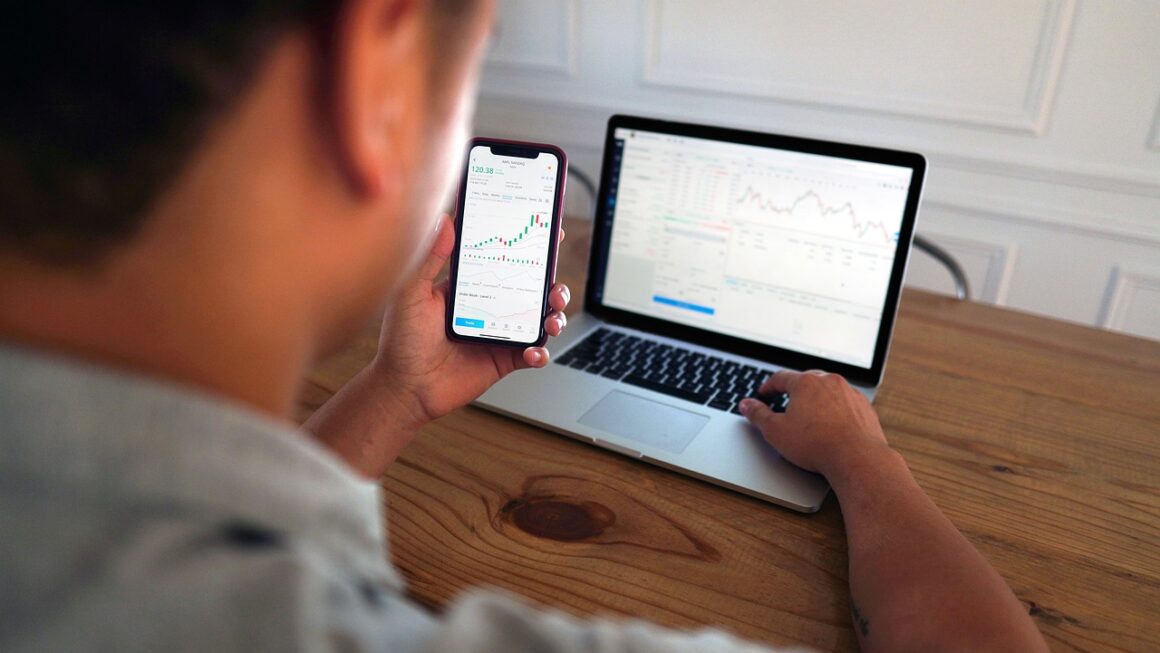
The financial markets offer a dizzying array of opportunities, but few avenues capture the imagination quite like short-term trading. While long-term investing focuses on patient growth over years, short-term trading dives into the dynamic, fast-paced world of capitalizing on fleeting price movements. It’s a realm where decisions are made in minutes or hours, and the potential for rapid gains, or equally rapid losses, is ever-present. This guide will unravel the intricacies of short-term trading, exploring its various forms, essential tools, psychological demands, and the critical balance between risk and reward, empowering you with the knowledge to approach this high-stakes environment intelligently.
What is Short-Term Trading?
Short-term trading is an investment strategy where traders buy and sell financial instruments with the goal of profiting from small, quick price changes. Unlike long-term investors who hold assets for months or years, short-term traders typically close their positions within minutes, hours, or a few days. The core principle is to exploit market volatility and supply-demand imbalances over brief periods.
The Core Concept: Capitalizing on Fleeting Opportunities
- Focus on Volatility: Short-term traders thrive on market movements. They look for assets exhibiting significant price swings within short timeframes.
- Rapid Turnaround: Capital is deployed and freed up quickly, allowing for multiple trades and compounding potential.
- Market Microstructure: Understanding order flow, bid-ask spreads, and liquidity is crucial for efficient execution.
Why Traders Choose Short-Term Strategies
While inherently risky, short-term trading offers several compelling advantages for certain individuals:
- Potential for Rapid Gains: Successful short-term trades can yield profits much faster than traditional long-term investments.
- Flexibility: Traders can react quickly to news, economic data, or technical breakouts, adjusting their strategies as market conditions change.
- Reduced Overnight Risk (for Day Traders): By closing all positions before the market closes, day traders eliminate the risk of adverse price movements occurring while markets are shut.
- Engagement and Challenge: For many, the analytical and fast-paced nature of short-term trading is mentally stimulating and rewarding.
Types of Short-Term Trading Strategies
Short-term trading encompasses several distinct approaches, each defined by its typical holding period and profit targets. Understanding these differences is key to choosing a strategy that aligns with your personality and risk tolerance.
Scalping: The Art of Tiny Profits
Scalping is the most extreme form of short-term trading, involving opening and closing positions within seconds to minutes. Scalpers aim to profit from minimal price changes, often just a few pips or cents, by executing a high volume of trades.
- Timeframe: Seconds to a few minutes.
- Goal: Accumulate many small profits throughout the trading day.
- Requirements: Extremely fast execution, low latency trading platform, high liquidity, and very tight spreads.
- Example: A trader buys 1,000 shares of a stock at $50.05 and sells them at $50.08, making a gross profit of $30 (minus commissions) within moments. They repeat this process dozens of times a day.
Day Trading: The Intraday Battle
Day trading involves opening and closing all positions within the same trading day, avoiding overnight risk. Day traders use various technical analysis tools to identify and capitalize on intraday price movements.
- Timeframe: Minutes to several hours.
- Goal: Profit from price fluctuations that occur between market open and close.
- Requirements: Deep understanding of technical analysis, disciplined risk management, significant time commitment, and often a minimum capital requirement (e.g., Pattern Day Trader rule in the US for stocks).
- Example: A trader identifies a stock breaking above a key resistance level on a 15-minute chart. They enter a long position, place a stop-loss order below the breakout point, and take profit as the stock approaches the next resistance or shows signs of reversal.
Swing Trading: Riding the Waves
Swing trading involves holding positions for a few days to several weeks, aiming to capture “swings” in price action within an overarching trend. It’s a middle ground between day trading and long-term investing.
- Timeframe: A few days to several weeks.
- Goal: Capture larger price movements (swings) that last longer than intraday fluctuations but shorter than major long-term trends.
- Requirements: A blend of technical and fundamental analysis, patience, and the ability to manage overnight and weekend risk.
- Example: A trader notices a stock pulling back to its 50-day moving average after a strong uptrend. They enter a long position, anticipating the stock to bounce off the moving average and continue its upward swing. They might exit when the stock reaches a previous high or shows signs of losing momentum.
Essential Tools and Techniques for Short-Term Traders
Success in short-term trading is heavily reliant on a robust toolkit and a disciplined approach to market analysis and risk management.
Technical Analysis: Decoding Price Charts
Technical analysis is the bedrock of short-term trading. It involves studying historical price charts and volume data to identify patterns and predict future price movements. Fundamental news is generally used for context rather than primary entry/exit signals.
- Key Tools:
- Candlestick Patterns: Visual representations of price action (open, close, high, low) that form predictive patterns (e.g., Doji, Hammer, Engulfing).
- Support and Resistance: Price levels where buying (support) or selling (resistance) pressure is expected to be strong, often acting as reversal or breakout points.
- Moving Averages (MAs): Indicators that smooth out price data to identify trend direction and potential support/resistance. Common MAs include the 20, 50, and 200-period simple or exponential moving averages.
- Oscillators: Indicators like the Relative Strength Index (RSI) and Moving Average Convergence Divergence (MACD) help identify overbought/oversold conditions and momentum shifts.
- Practical Example: A day trader might look for a stock’s price to consolidate near a 20-period Exponential Moving Average (EMA) on a 5-minute chart, indicating potential support before a continuation of an uptrend. They would then look for a strong bullish candlestick pattern at that level to confirm entry.
Risk Management: Protecting Your Capital
The single most critical aspect of short-term trading is risk management. Without it, even a string of winning trades can be wiped out by a single large loss.
- Stop-Loss Orders: An order placed with a broker to sell an asset once it reaches a certain price, thereby limiting potential losses on a trade. Always define your stop-loss before entering a trade.
- Position Sizing: Determining the appropriate number of shares or contract units to trade based on your risk capital. A common rule is to risk no more than 1-2% of your total trading capital on any single trade. For example, if you have $10,000 and risk 1%, your maximum loss per trade is $100.
- Risk-Reward Ratio: The comparison of the potential loss to the potential profit on a trade. Aim for trades where the potential reward significantly outweighs the potential risk (e.g., a 1:2 or 1:3 ratio, meaning you expect to gain at least twice or thrice what you risk).
Trading Platforms and Brokers
The tools you use to execute trades are paramount. A reliable, fast, and feature-rich trading platform is non-negotiable for short-term traders.
- Low Latency & Fast Execution: Crucial for scalpers and day traders where milliseconds matter.
- Advanced Charting Tools: Comprehensive technical analysis features, multiple timeframes, and a wide array of indicators.
- Direct Market Access (DMA): Allows traders to place orders directly onto the exchange’s order book, potentially offering better pricing and faster fills.
- Low Commissions and Spreads: Transaction costs can eat into profits, especially for high-frequency traders.
The Psychology and Discipline of Short-Term Trading
Beyond charts and indicators, the mental game is often what separates consistently profitable traders from those who struggle. Emotional control and strict discipline are paramount.
Emotional Control: Taming the Inner Beast
The fast-paced nature of short-term trading can trigger powerful emotions like fear and greed, which often lead to irrational decisions.
- Fear of Missing Out (FOMO): Entering trades without proper analysis because you see a price moving quickly, only to get caught at the top or bottom.
- Greed: Holding onto winning trades for too long, hoping for more profit, and watching them turn into losses, or overtrading by taking too many positions.
- Revenge Trading: Trying to immediately recover losses by taking impulsive, larger, and often poorly conceived trades.
- Actionable Takeaway: Practice mindfulness and step away from the screen when emotions run high. Stick to your predefined plan regardless of how you feel.
Developing a Robust Trading Plan
A well-defined trading plan acts as your roadmap and rulebook, guiding your decisions and preventing impulsive actions.
- Entry Criteria: Specific conditions that must be met before you enter a trade (e.g., “stock must be above 20-EMA, with RSI crossing above 50, and a bullish engulfing candle”).
- Exit Criteria: Clearly defined conditions for taking profit (e.g., “exit at next resistance level, or if price breaks below 5-EMA”) and for exiting a losing trade (your stop-loss).
- Risk Parameters: Your maximum risk per trade, position sizing rules, and overall daily/weekly loss limits.
- Strategy Details: The specific technical indicators, chart patterns, and timeframes you will use.
- Backtesting and Journaling: Test your strategies on historical data (backtesting) and meticulously record every trade, including entry/exit points, reasons for the trade, and emotional state (journaling). This helps identify strengths and weaknesses.
- Actionable Takeaway: Write down your trading plan and review it daily before the market opens. Treat it as a business plan.
Continuous Learning and Adaptation
Markets are dynamic and constantly evolving. What worked yesterday may not work today. Short-term traders must be perpetual students.
- Reviewing Performance: Regularly analyze your trading journal to identify recurring mistakes and successful patterns.
- Staying Informed: Keep abreast of economic news, central bank announcements, and geopolitical events that can impact market volatility and sentiment.
- Adapting Strategies: Be willing to adjust or even discard strategies that are no longer effective under new market conditions.
- Actionable Takeaway: Allocate dedicated time each week for market research, strategy review, and personal reflection on your trading performance.
The Pros and Cons of Short-Term Trading
Like any financial endeavor, short-term trading comes with its own set of advantages and disadvantages that prospective traders must weigh carefully.
Advantages of Short-Term Trading
- Potential for High Returns: Successful short-term traders can generate significant profits in a relatively short period, often outperforming long-term benchmarks.
- Capital Efficiency: Money is not tied up for extended periods, allowing for quicker reinvestment and compounding of gains.
- Flexibility and Control: Traders have complete control over when and what they trade, adapting to immediate market conditions.
- Exposure to Diverse Markets: Short-term strategies can be applied across various asset classes, including stocks, forex, commodities, and cryptocurrencies.
- Learning Opportunity: The rapid feedback loop of short-term trading provides a steep learning curve, quickly honing analytical and decision-making skills.
Disadvantages and Risks of Short-Term Trading
- High Risk of Capital Loss: The potential for rapid gains is mirrored by an equally high potential for rapid losses. Many short-term traders fail due to inadequate preparation or poor risk management.
- Significant Time Commitment: Day trading and scalping demand constant attention and focus during market hours, making it difficult to combine with a full-time job.
- High Transaction Costs: Frequent trading generates substantial commissions, spreads, and potentially capital gains taxes, which can erode profits.
- Intense Psychological Pressure: The constant decision-making, the thrill of winning, and the sting of losing can take a severe emotional toll.
- Steep Learning Curve: Mastering technical analysis, developing a robust strategy, and controlling emotions requires extensive study, practice, and experience.
- Market Noise and Manipulation: Short-term price movements can often be random, driven by market noise, or even subject to manipulation, making consistent profitability challenging.
Conclusion
Short-term trading is a challenging yet potentially rewarding path within the financial markets. It calls for a unique blend of analytical prowess, lightning-fast decision-making, and ironclad emotional discipline. While the allure of quick profits is strong, it’s crucial to approach this arena with realism, comprehensive education, and a deep understanding of its inherent risks. By mastering technical analysis, implementing stringent risk management protocols, developing a detailed trading plan, and continuously refining your approach, you can navigate the volatile waters of short-term trading with greater confidence and increase your chances of sustainable success. Remember, preparation and patience are as vital as swift execution in this dynamic pursuit.