Backbends – those exhilarating, heart-opening postures that invite us to lean back, expand, and perhaps, glimpse a new perspective. For many, they represent a peak of physical achievement in yoga, a testament to flexibility and strength. Yet, backbends are so much more than impressive shapes; they are a profound journey into the self, offering immense physical, mental, and emotional benefits. While they can initially feel daunting, a mindful and progressive approach unlocks a world of transformation, helping us to release tension, cultivate courage, and find a vibrant sense of aliveness. Join us as we explore the art and science of safe, effective backbending, transforming apprehension into exhilaration.
The Transformative Power of Backbends: More Than Just Flexibility
Often perceived as solely a test of spinal flexibility, backbends offer a rich tapestry of benefits that extend far beyond the physical realm. They are powerful postures designed to invigorate the body, calm the mind, and uplift the spirit, making them a cornerstone of a holistic yoga practice.
Physical Benefits: Spine Health, Strength, and Organ Stimulation
- Spinal Mobility and Health: Modern lifestyles, characterized by prolonged sitting and forward-folding activities, often lead to a stiff and rounded upper back. Backbends counteract this by promoting extension and flexibility throughout the entire spine, nourishing the intervertebral discs and improving range of motion.
- Improved Posture: By strengthening the posterior chain muscles (back extensors, glutes, hamstrings) and opening the chest and shoulders, backbends naturally help to correct slumped posture, leading to a more upright and confident stance.
- Core and Glute Strength: Contrary to popular belief, effective backbends require significant core engagement and glute activation to protect the lower back and support the spinal curve. This strengthens vital stabilizing muscles.
- Stimulation of Abdominal Organs: The compression of the abdomen in backbends can stimulate and tone internal organs, aiding digestion and improving circulation to the digestive and reproductive systems.
- Increased Lung Capacity: Opening the chest and rib cage allows for deeper breaths, expanding lung capacity and improving respiratory efficiency.
Mental & Emotional Uplift: Energy, Courage, and Stress Release
- Energy Boost: Backbends are renowned for their energizing effect. By stimulating the sympathetic nervous system, they can awaken the body and mind, leaving you feeling revitalized and alert.
- Mood Elevation: The expansive nature of backbends can help combat feelings of sadness, lethargy, and mild depression. The physical act of opening the chest is often linked to opening the heart emotionally, fostering feelings of joy and enthusiasm.
- Cultivating Courage and Confidence: Physiologically, backbending exposes the most vulnerable part of the body (the front). Leaning back requires an act of trust and courage, translating into increased self-confidence and a willingness to face challenges off the mat.
- Stress and Anxiety Reduction: While initially energizing, regular practice can help regulate the nervous system, reducing chronic stress and anxiety by releasing stored tension in the chest and shoulders, common areas for emotional holding.
Energetic Awakening: Heart Chakra and Vitality
In yogic philosophy, backbends are deeply connected to the Anahata Chakra, the heart energy center. Opening this chakra is believed to foster compassion, love, and connection. Many practitioners report a profound sense of emotional release and openness after a backbend practice, feeling more connected to themselves and others. It’s an awakening of vital life force, or “prana,” promoting an overall sense of wellbeing and vitality.
Actionable Takeaway: Approach backbends not just as physical exercises, but as opportunities for holistic growth. Focus on the sensations in your body and mind, allowing the practice to unlock newfound energy and emotional freedom.
Building a Strong Foundation: Essential Preparatory Poses
Attempting deep backbends without proper preparation is a recipe for strain or injury. A strong, stable, and mobile foundation is paramount. This involves not only warming up the spine but also strengthening supporting muscles and opening areas that might limit your range of motion.
Warm-up is Key: Gentle Movements and Thoracic Spine Mobility
Never dive into deep backbends cold. A thorough warm-up prepares your muscles and joints, making the spine more supple and receptive. Focus on gentle, dynamic movements.
- Cat-Cow (Marjaryasana-Bitilasana): Excellent for spinal articulation, warming up the entire length of the spine. Practice 10-15 rounds, linking breath to movement.
- Thread the Needle (Urdhva Mukha Pasasana): Gently mobilizes the thoracic spine and shoulders, which are crucial for deeper backbends.
- Gentle Twists: Seated or supine twists can warm up the spine’s rotational capacity, further improving its overall mobility.
- Sun Salutations (Surya Namaskar): A few rounds of Sun Salutations warm the entire body, preparing major muscle groups for action.
Core Engagement: Crucial for Protecting the Lower Back
A common misconception is that backbends are all about “bending backward.” In reality, a strong and engaged core acts as a protective brace for the lumbar spine, preventing over-compression and distributing the curve more evenly. Think of your core as the front line of defense.
- Plank Pose: Builds foundational core strength. Hold for 30-60 seconds, focusing on drawing the navel towards the spine.
- Boat Pose (Paripurna Navasana): Strengthens the deep abdominal muscles. Try 3-5 repetitions, holding for 15-30 seconds each.
- Bird-Dog: Improves core stability and coordination, crucial for spinal safety.
Shoulder & Hip Flexor Opening: Essential for Deeper Bends
Tight shoulders and hip flexors are often the primary limiting factors in backbends, not necessarily spinal stiffness. Addressing these areas can dramatically improve your backbend potential and comfort.
- Shoulder Stretches:
- Eagle Arms (Garudasana Arms): Opens the upper back and shoulders.
- Cow Face Arms (Gomukhasana Arms): Increases shoulder mobility.
- Puppy Dog Pose (Urdhva Mukha Pasasana variation): Deeply stretches the lats and shoulders.
- Hip Flexor Stretches:
- Low Lunge (Anjaneyasana): Releases tightness in the psoas and quadriceps. Hold for 30-60 seconds on each side.
- Half Splits (Ardha Hanumanasana): Prepares hamstrings and provides a gentle hip flexor stretch on the front leg.
- Reclined Hero Pose (Supta Virasana): For those with sufficient knee and ankle flexibility, deeply stretches the quads and hip flexors.
Actionable Takeaway: Dedicate at least 10-15 minutes to these preparatory poses before attempting any significant backbends. Consistency in preparing your body will lead to safer and deeper progress.
Exploring Common Backbend Poses & Variations
Backbends exist on a spectrum, from gentle lifts to profound extensions. It’s crucial to approach them progressively, honoring your body’s current capabilities and focusing on proper alignment over depth.
Beginner-Friendly Backbends: Building Confidence and Awareness
These poses are excellent starting points to introduce spinal extension, build strength, and develop body awareness without excessive strain.
- Sphinx Pose (Salamba Bhujangasana):
- How to: Lie on your stomach, bring forearms parallel to each other, elbows directly under shoulders. Press down through forearms and pubic bone, gently lifting chest. Gaze forward or slightly down.
- Focus: Lengthening the spine, opening the chest without crunching the lower back. Engage glutes slightly.
- Benefit: Gentle spinal extension, strengthens upper back.
- Cobra Pose (Bhujangasana):
- How to: Lie on stomach, hands under shoulders, fingertips in line with tops of shoulders. Press tops of feet and pubic bone down. Inhale, lift head and chest using back muscles first, then lightly press through hands. Elbows hug in.
- Focus: Keep a long neck, broad collarbones. Distribute the curve throughout the spine, avoiding dumping into the lower back.
- Benefit: Strengthens entire back body, improves spinal flexibility.
- Bridge Pose (Setu Bandhasana):
- How to: Lie on back, bend knees, feet hip-width apart and parallel, heels close to glutes. Press feet and arms into mat, lift hips. Clasp hands underneath or keep arms parallel.
- Focus: Engage glutes and hamstrings to lift hips. Keep knees tracking over ankles, avoid splaying them out. Lift sternum towards chin.
- Benefit: Strengthens glutes and hamstrings, opens chest and hip flexors, gentle spinal extension.
Intermediate Challenges: Deepening the Backbend Journey
Once comfortable with the basics, these poses offer deeper spinal extension and require more strength, flexibility, and spatial awareness.
- Bow Pose (Dhanurasana):
- How to: Lie on stomach. Bend knees, reach back to grasp outer ankles or feet. On an inhale, lift chest and thighs off the floor, using the pulling action of legs into hands to deepen the lift.
- Focus: Kick legs strongly back and up. Keep knees hip-width apart. Breathe into the front of the body.
- Benefit: Full body strengthener, deep abdominal compression, intense spinal flexibility.
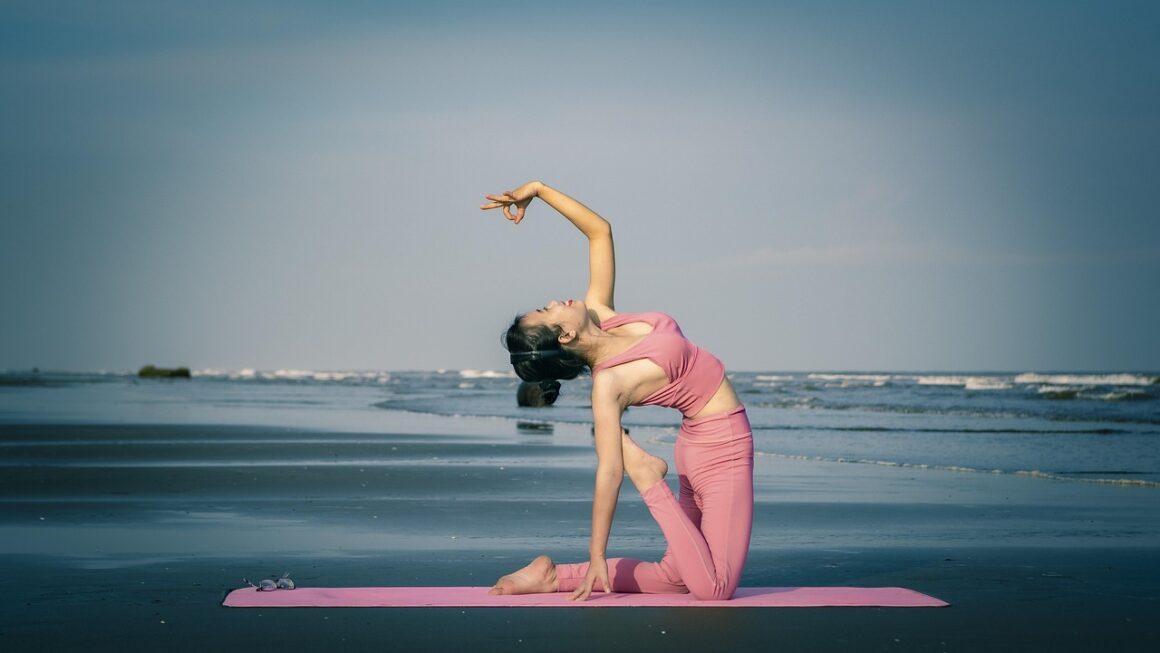
- Camel Pose (Ustrasana):
- How to: Kneel with hips over knees, shins parallel. Hands on lower back for support, fingers pointing down. Inhale, lift chest. Exhale, lean back, reaching for heels (tucked toes if hands don’t reach). Head can drop back if comfortable.
- Focus: Drive hips forward, engage glutes. Lift through the sternum, rather than collapsing the lower back.
- Benefit: Intense heart opener, stretches entire front of the body, builds courage.
- Wheel Pose (Urdhva Dhanurasana):
- How to: Lie on back, bend knees, feet hip-width apart. Place hands beside ears, fingertips pointing towards shoulders, elbows pointing up. Press into feet and hands, lift hips and chest. Straighten arms and legs as much as possible.
- Focus: Rotate inner thighs down, press big toes down. Distribute weight evenly between hands and feet. Aim for a long, even arc in the spine.
- Benefit: Major backbend, strengthens arms, legs, core, and spine. Significant heart opener.
Advanced Explorations (Briefly): Expanding Horizons
Poses like King Pigeon (Eka Pada Rajakapotasana), Scorpion Pose (Vrischikasana), and Ganda Bherundasana (Formidable Face Pose) represent the pinnacle of backbending, requiring years of dedicated practice, exceptional flexibility, and profound strength. These are often best explored under the guidance of an experienced teacher.
Actionable Takeaway: Progress slowly. Master the foundations before moving to more challenging poses. Even small improvements in beginner poses can yield significant benefits.
Safety First: Protecting Your Spine in Backbends
While backbends offer incredible benefits, improper technique can lead to discomfort or injury, particularly in the lower back. Prioritizing safety through mindful engagement and listening to your body is non-negotiable.
Listen to Your Body: The Primary Rule
This is the most crucial guideline for any yoga practice, especially backbends. Pain is your body’s alarm system. If you feel any sharp, pinching, or shooting pain, especially in your lower back, ease off immediately. A healthy backbend feels expansive, challenging, and invigorating, not painful.
- Distinguish between sensation and pain: Sensation is stretch or effort; pain is a warning.
- Never push through pain: It’s better to stay in a gentler variation or skip a pose than to risk injury.
- Respect your body’s limits each day: Flexibility can vary daily due to factors like sleep, stress, and hydration.
Core & Glute Engagement: Essential for Lower Back Protection
The lumbar spine (lower back) is naturally very mobile, making it prone to over-compressing in backbends if not properly supported. Engaging your core and glutes helps stabilize this area.
- Draw Navel to Spine: In almost all backbends, maintain a gentle engagement of your lower abdominal muscles. This creates a “lift” in the lower back, protecting it from crunching.
- Engage Glutes: Squeeze your glutes, especially the outer hips, to provide a strong foundation and prevent the hips from splaying, which can put pressure on the sacrum. However, avoid over-squeezing the glutes in poses like Camel where it might restrict hip mobility. Find a balance.
Avoid Compressing the Lower Back: Focus on Lengthening
The goal is to create an even curve throughout the entire spine, not just hinge at the lumbar. Think length, then arch.
- Lift from the Sternum: Imagine lifting your breastbone towards the sky, rather than just throwing your head back or pushing your hips forward without engaging the upper back.
- Broaden Across Collarbones: This helps activate the upper back and keeps the chest open, preventing shoulder impingement and encouraging an even spinal curve.
- Use Your Legs: In poses like Wheel and Bow, actively pressing through your feet and lengthening through your legs helps lift the pelvis and distribute the backbend.
Counter Poses: Essential for Neutralizing the Spine
After any significant backbend, it’s vital to neutralize the spine with counter poses. These help to release tension and restore spinal equilibrium.
- Child’s Pose (Balasana): A gentle forward fold that releases the lower back. Hold for several breaths.
- Supine Spinal Twist (Supta Matsyendrasana): Gently twists the spine, releasing tension in the back and hips.
- Pawanmuktasana (Knees-to-Chest): Gently compresses the abdomen and stretches the lower back.
- Paschimottanasana (Seated Forward Fold): A passive forward fold to lengthen the entire back body.
Actionable Takeaway: Make conscious core and glute engagement a habit in every backbend. Always follow backbends with appropriate counter poses to maintain spinal health.
Deepening Your Backbend Practice: Tips for Progression
As you become more comfortable and confident with backbends, you might naturally seek ways to deepen your practice. Remember, progression is a gradual journey, not a race. Patience, consistency, and mindful awareness are your greatest allies.
Consistency is Key: Regular and Mindful Practice
Like any skill, backbending improves with regular, dedicated practice. Short, frequent sessions are often more effective than infrequent, intense ones.
- Daily Dose: Even 5-10 minutes of gentle spinal extension each day (e.g., Cat-Cow, Sphinx) can make a significant difference over time.
- Integrate into Flow: Weave backbends naturally into your regular yoga sequences.
- Listen to Cycles: Be aware that your body’s flexibility might vary with menstrual cycles, stress levels, or time of day.
Breath Awareness: Using Breath to Deepen and Release
Breath is a powerful tool in all yoga poses, but especially in backbends. It can create space, deepen the stretch, and help you find a sense of ease.
- Inhale for Length and Expansion: As you inhale, imagine drawing energy up the spine, creating length. Use the inhale to lift and expand your chest.
- Exhale for Release and Depth: On the exhale, soften any unnecessary tension and allow your body to gently deepen into the pose, without forcing.
- Ujjayi Breath: Practicing Ujjayi (victorious breath) helps maintain focus, generates internal heat, and regulates the nervous system during challenging poses.
Props as Allies: Blocks, Straps, and Blankets
Don’t view props as crutches, but as intelligent tools that can enhance your practice, provide support, and safely guide you into deeper sensations.
- Yoga Blocks:
- Under hands in Cobra/Upward Dog to create more lift.
- Between thighs in Bridge/Wheel to encourage inner thigh engagement.
- Under the sacrum in Supported Bridge for a restorative backbend.
- Behind you in Camel Pose to reach if heels are too far.
- Yoga Straps:
- Around ankles in Bow Pose if you can’t reach your feet.
- For shoulder stretches to improve range of motion before backbends.
- Blankets:
- Under knees in Camel for cushioning.
- Rolled up under the thoracic spine for a gentle chest opener.
Mindset Matters: Patience, Non-Judgment, and Curiosity
Your mental approach to backbends is as important as your physical technique. Cultivate a mindset of exploration and acceptance.
- Patience: Flexibility takes time. Celebrate small victories and avoid frustration.
- Non-Judgment: Compare your current pose only to your previous one, not to others. Every body is unique.
- Curiosity: Approach each backbend with a sense of inquiry. What do you feel? Where can you soften? Where can you strengthen?
Actionable Takeaway: Incorporate props mindfully, practice consistently, and use your breath to guide your movements. Most importantly, embrace the journey with patience and self-compassion.
Conclusion
Backbends are a powerful gateway to greater physical freedom, emotional openness, and renewed vitality. From the gentle arch of Sphinx to the expansive power of Wheel, each pose offers a unique opportunity to strengthen your spine, invigorate your organs, and uplift your spirit. By prioritizing proper preparation, conscious engagement of the core and glutes, and above all, listening intently to your body, you can safely and effectively unlock the profound benefits of these transformative postures. Remember that the journey of backbending is not about achieving the “perfect” shape, but about discovering new depths of strength, flexibility, and courage within yourself. Embrace the process, honor your body, and allow the radiant energy of backbends to illuminate your path.