
Backbends. The very word can evoke a mix of awe, trepidation, and sometimes, a little fear. Often perceived as advanced or intimidating yoga poses, backbends are, in fact, incredibly transformative and accessible with the right approach. They are far more than just deep spinal extensions; they are powerful heart openers, posture correctors, and energy boosters that can profoundly impact both your physical and mental well-being. This comprehensive guide will demystify backbends, exploring their numerous benefits, fundamental principles for safe practice, popular poses, and actionable strategies to cultivate a confident and joyful backbending journey.
Understanding Backbends: Unlocking Spinal Freedom
Backbends are a fundamental category of movement that extends the spine, bringing openness to the front of the body. While they might look challenging, their essence is about creating space and flexibility in areas often compressed by modern lifestyles.
What Exactly Are Backbends?
At their core, backbends are movements that involve extending the spine. This means the natural curve of your spine is accentuated backward, creating a stretch along the front of your torso. However, a well-executed backbend isn’t solely about the spine; it’s a full-body experience that involves:
- Spinal Extension: The primary action, moving the vertebrae backward.
- Hip Flexor Opening: Crucial for many deeper backbends, as tight hip flexors can restrict spinal movement.
- Shoulder Girdle Mobility: Essential for reaching back and supporting the pose.
- Chest Expansion: Opening the heart space, often associated with emotional release.
- Core Engagement: Vital for protecting the lower back and creating a stable foundation.
The goal isn’t necessarily to achieve extreme flexibility, but rather to cultivate a healthy, mobile, and strong spine.
The Holistic Impact of Spinal Extension
Practicing backbends offers a holistic range of benefits, touching upon physical, energetic, and emotional layers:
- Physical Invigoration: They counteract the forward-folding tendencies of daily life (sitting, texting) and stimulate internal organs.
- Energetic Upliftment: Often referred to as “heart openers,” they are believed to clear energetic blockages and boost vitality.
- Emotional Release: Many practitioners experience a sense of emotional freedom, confidence, and joy after backbending.
The Profound Benefits of a Consistent Backbend Practice
Integrating backbends into your movement routine offers a wealth of advantages that contribute to overall health and vitality.
Physical Advantages for Body Health
The physical benefits of backbends are extensive, addressing common modern ailments and enhancing physical prowess:
- Improved Spinal Flexibility: Regular practice increases the range of motion in your spine, which is vital for overall mobility and agility.
- Better Posture: By strengthening the muscles of the back and opening the chest, backbends directly combat slouching and promote an upright, confident stance. This can significantly reduce back and neck pain.
- Strengthened Back Muscles: Poses like Cobra and Bridge build strength in the erector spinae and gluteal muscles, crucial for spinal support.
- Enhanced Core Strength: Proper backbending requires significant abdominal engagement to protect the lower back, thus strengthening the core.
- Stretches the Front Body: They effectively stretch the hip flexors, abdominals, chest, and shoulders—areas often tight from prolonged sitting.
- Stimulates Organs: The compression and extension can gently massage and stimulate abdominal organs, potentially aiding digestion and circulation.
- Boosted Lung Capacity: Opening the chest allows for deeper breaths, increasing oxygen intake and vital lung capacity.
Actionable Takeaway: To counter desk-bound posture, incorporate a gentle backbend like Sphinx or Cobra into your daily routine for even 5-10 minutes. Your spine will thank you!
Mental and Emotional Upliftment
Beyond the physical, backbends are profound tools for mental clarity and emotional resilience:
- Stress Reduction: By encouraging deep breathing and releasing tension in the chest and shoulders, backbends can significantly lower stress levels.
- Increased Energy and Vitality: Many report feeling more awake, energized, and uplifted after practicing backbends, making them excellent morning poses.
- Boosted Confidence: The expansive nature of backbends can translate into an emotional feeling of openness and self-assurance. Psychologically, opening the chest is linked to courage.
- Emotional Release: The heart space is often where emotional tension is held. Opening this area can facilitate the release of old emotions, leading to a sense of lightness.
- Combats Depression: While not a cure, the invigorating and expansive nature of backbends can positively impact mood, offering a sense of hope and openness.
Actionable Takeaway: If you’re feeling sluggish or low, try a few rounds of Cat-Cow with an emphasis on the cow pose (backbend) to gently awaken your spine and uplift your mood.
Energetic and Spiritual Awakening
In many yogic traditions, backbends are revered for their impact on the body’s energy system:
- Heart Chakra Activation: They are strongly associated with Anahata Chakra (the heart chakra), believed to be the center of love, compassion, and joy. Opening this area is thought to foster these qualities.
- Increased Prana Flow: By expanding the front of the body, backbends are said to facilitate the free flow of prana (life force energy), leading to a greater sense of aliveness.
Mastering Safe Backbending: Principles for Success
Safety is paramount in backbending. Approaching these poses with intelligence and mindfulness will ensure a sustainable and beneficial practice.
Prioritizing Warm-up and Preparation
Never rush into deep backbends. Proper preparation is non-negotiable for protecting your spine and other joints.
- Mobilize the Spine: Begin with gentle spinal movements like Cat-Cow, spinal twists, and seated back extensions.
- Open Hip Flexors: Tight hip flexors (psoas) can pull on the lower back, so lunges and kneeling stretches are crucial.
- Warm Up Shoulders: Rotations and gentle stretches for the shoulders and chest prepare the upper body for extension.
- Activate Glutes and Hamstrings: Strong glutes protect the lower back by supporting the pelvis. Gentle hamstring stretches create space.
Practical Example: Before attempting a Camel Pose, spend 5-10 minutes warming up with poses like Downward-Facing Dog, Low Lunge, and Thread the Needle to prepare the whole body.
Core Engagement: Your Spinal Protector
Engaging your core is not about sucking in your stomach; it’s about creating a strong, supportive cylinder around your spine.
- Gentle Drawing In: Imagine gently drawing your navel towards your spine, creating a corset-like support.
- Lift from the Pelvic Floor: Engage your pelvic floor muscles (Mula Bandha) to create upward energy and stability.
- Avoid Over-arching the Lower Back: A common mistake is to “dump” into the lower back. Engage your core and glutes to lengthen the lower spine rather than compressing it.
Actionable Takeaway: In any backbend, always think of lengthening your spine first, then arching. Use your core to create space between your vertebrae.
The Power of Breath and Mindful Movement
Your breath is your guide and your anchor in backbends. Let it lead the way.
- Inhale to Lengthen and Expand: Use your inhale to create space in your spine and to open your chest.
- Exhale to Deepen (Carefully): As you exhale, you might find a little more space to deepen the pose, but always listen to your body.
- Never Hold Your Breath: If your breath becomes strained or shallow, you’ve gone too far. Ease back.
- Listen to Your Body: Pain is a signal to back off immediately. Discomfort is normal in stretching, but sharp or pinching pain is not.
Journey Through Key Backbend Poses: Practical Guidance
From gentle openers to more advanced expressions, there’s a backbend for every level of practitioner. Here are some key poses and tips for approaching them safely.
Beginner-Friendly Backbends
Start with these foundational poses to build strength, flexibility, and confidence.
- Sphinx Pose (Salamba Bhujangasana):
- How to: Lie on your stomach, forearms on the mat, elbows under shoulders. Lift your chest gently, pressing palms and forearms down. Keep your neck long.
- Focus: A gentle, accessible backbend that opens the chest and strengthens the upper back.
- Tip: Keep a slight engagement in your glutes and core to protect your lower back.
- Cobra Pose (Bhujangasana):
- How to: Lie on your stomach, hands under shoulders. Press down through the tops of your feet and pubic bone. Inhale to lift your chest off the mat, keeping elbows hugging in. Use primarily back strength, not just arm strength.
- Focus: Strengthens the back body and gently stretches the front torso.
- Tip: Keep your gaze slightly forward or down to maintain a long neck. Imagine lengthening through the crown of your head.
- Bridge Pose (Setu Bandhasana):
- How to: Lie on your back, knees bent, feet flat on the floor, hip-width apart, heels close to glutes. Press through your feet, lifting your hips. Interlace hands underneath or keep them alongside the body.
- Focus: Opens the chest and shoulders, strengthens glutes, hamstrings, and lower back.
- Tip: Keep your knees from splaying out. Press down through your inner feet and lift your inner thighs towards the ceiling.
Intermediate Challenges and Progressions
Once you’ve built a foundation, you can explore these deeper backbends.
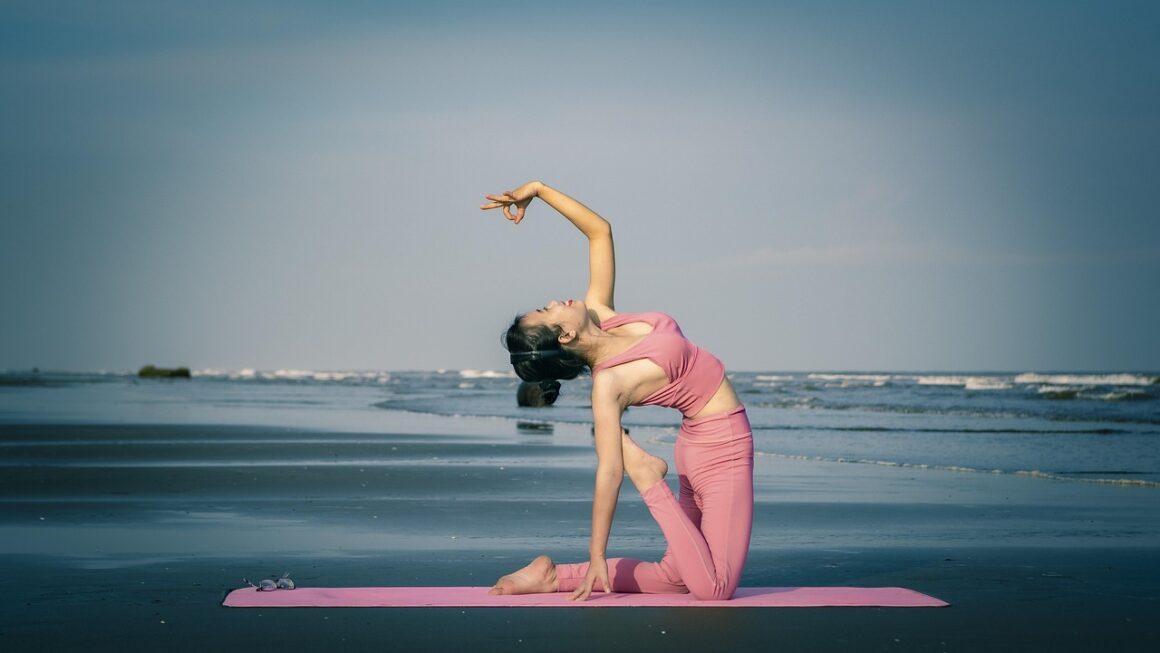
- Camel Pose (Ustrasana):
- How to: Kneel on the mat, knees hip-width apart. Place hands on your lower back, fingers pointing down or up. Lift your chest, engaging glutes and core, and slowly arch back, reaching for your heels if accessible. Keep hips over knees.
- Focus: A deep heart opener and hip flexor stretch.
- Tip: If reaching heels is too much, keep hands on your lower back or use blocks for your hands. Lead with your heart, not your head.
- Bow Pose (Dhanurasana):
- How to: Lie on your stomach. Bend knees, reach back, and grasp ankles or shins. On an inhale, kick feet into hands, lifting chest and thighs off the mat.
- Focus: A full-body backbend that stretches the entire front body and strengthens the back.
- Tip: Keep knees no wider than hips. Breathe deeply to rock gently with your breath.
- Wheel Pose (Urdhva Dhanurasana):
- How to: Lie on your back, knees bent, feet flat. Place hands by your ears, fingers pointing towards shoulders, elbows pointing up. Press through feet and hands, lifting hips and chest off the mat. Straighten arms and legs as much as possible.
- Focus: A powerful, full-spinal backbend that requires significant strength and flexibility.
- Tip: Start with preparatory poses like Bridge. Keep your feet and hands parallel. Use a wall for support or a spotter if needed. Think of lifting your hips high and reaching your heart forward.
Cultivating Your Backbend Practice: Tips for Growth
A successful backbend practice is built on patience, consistency, and self-awareness.
Overcoming Fear and Building Confidence
Fear of falling or hurting your back is common. Address it proactively:
- Start Small: Begin with the gentlest backbends and gradually progress. There’s no rush.
- Use Props: Blocks, blankets, and bolsters can provide support and make poses more accessible, building confidence. For example, a block under the sacrum in Bridge Pose.
- Practice Against a Wall: For poses like Handstand or Forearm Stand variations with backbends, a wall offers security.
- Listen to Your Body: Learn to differentiate between a healthy stretch and pain. If it hurts, stop.
Practical Example: If Wheel Pose feels intimidating, practice lifting into Bridge Pose with a block between your thighs and another under your sacrum to strengthen and support your lower back before attempting the full pose.
Consistency and Patience: The Keys to Progress
Like any skill, backbending improves with regular, mindful practice.
- Regular Practice: Even short, consistent sessions are more effective than infrequent, intense ones. Aim for 3-4 times a week.
- Patience is a Virtue: Flexibility and strength build over time. Celebrate small improvements rather than focusing on the ultimate pose.
- Integrate Complementary Poses: Forward folds, twists, and hip openers are crucial counter-poses and preparation for backbends.
Actionable Takeaway: Don’t just practice backbends. Balance them with an equal amount of forward folds and twists to maintain spinal equilibrium and health. A sequence could be Cat-Cow, Cobra, Child’s Pose, Seated Forward Fold, Supine Twist.
Listening to Your Body: Modifications and Rest
Your body is your best teacher. Respect its messages.
- Modify as Needed: Use variations that suit your current flexibility and strength. There’s no shame in modifying.
- Rest and Recover: Overdoing it can lead to injury. Ensure adequate rest between sessions.
- Stay Hydrated and Nourished: A well-hydrated and nourished body is more pliable and less prone to injury.
Conclusion
Backbends are a powerful pathway to physical freedom, emotional release, and energetic expansion. They are not just about impressive flexibility, but about cultivating spinal health, opening the heart, and finding a deeper connection with your inner strength. By understanding their benefits, adhering to principles of safe practice, and approaching each pose with mindfulness and patience, you can unlock the transformative potential of backbends. Remember to warm up, engage your core, breathe deeply, and always listen to your body’s wisdom. Embrace the journey of backbending, and discover the joy, confidence, and vibrant energy that a healthy, open spine can bring to your life.