In the vast, interconnected world of global finance, exchanges stand as the undisputed epicenters of economic activity. From bustling trading floors to sophisticated digital platforms, these vital marketplaces facilitate the buying and selling of virtually every imaginable asset, powering economies and enabling individuals and institutions to grow wealth. Understanding the intricate workings and diverse landscape of these financial behemoths is not just for seasoned investors; it’s crucial for anyone looking to navigate the modern financial system with confidence and make informed decisions.
What Are Exchanges? The Pillars of Global Trade
At their core, exchanges are organized markets where various assets and instruments are traded. Think of them as highly regulated, transparent marketplaces designed to bring buyers and sellers together efficiently. They are fundamental to capital formation, investment, and risk management across the globe.
Defining the Role of an Exchange
An exchange serves several critical functions that underpin modern financial systems:
- Price Discovery: Through the continuous interaction of supply and demand, exchanges help determine fair market prices for assets.
- Liquidity Provision: They ensure that assets can be bought and sold quickly without significantly impacting their price, thanks to a high volume of participants.
- Transparency: Exchanges often require disclosure of trading data, offering visibility into market activity and pricing.
- Regulation and Trust: Most established exchanges operate under strict regulatory frameworks, providing a layer of security and trust for participants.
- Capital Formation: By listing securities, exchanges allow companies and governments to raise capital from investors.
Practical Example: When a company like Apple Inc. wants to raise money to fund new projects, it can issue shares on a stock exchange like the NASDAQ. Investors buy these shares, providing capital to Apple, and in return, they become part-owners of the company.
Diverse Landscapes: Exploring Types of Exchanges
The term “exchange” is broad, encompassing a wide array of specialized platforms, each catering to specific types of assets and participants. Understanding these distinctions is key to comprehending the global financial tapestry.
Stock Exchanges
Perhaps the most well-known, stock exchanges are platforms for trading shares of publicly listed companies. They are crucial for both corporate financing and individual wealth accumulation.
- Key Examples:
- New York Stock Exchange (NYSE): Known for its large-cap, established companies.
- NASDAQ: A technology-heavy exchange, home to many innovative growth companies.
- London Stock Exchange (LSE): One of the world’s oldest and most international exchanges.
- Actionable Takeaway: Investors looking to own a piece of publicly traded companies will primarily use brokerage accounts that grant access to these exchanges. Researching an exchange’s listed companies and regulatory environment is crucial for any stock investor.
Commodity Exchanges
These exchanges facilitate the trading of raw materials and primary agricultural products. Commodities can be traded as spot contracts (for immediate delivery) or, more commonly, as futures and options contracts.
- Key Examples:
- Chicago Mercantile Exchange (CME Group): Trades agricultural products, metals, energy, and financial derivatives.
- Intercontinental Exchange (ICE): A global network of exchanges and clearing houses primarily for energy products.
- Practical Example: A farmer might sell corn futures on the CME to lock in a price before harvest, hedging against potential price drops. Conversely, a food manufacturer might buy corn futures to secure supply at a predetermined price.
Foreign Exchange (Forex) Markets
The forex market is the largest and most liquid financial market globally, facilitating the exchange of currencies. Unlike stock or commodity exchanges, forex is largely an over-the-counter (OTC) market, meaning trades occur directly between two parties, but large institutional players and ECNs (Electronic Communication Networks) act as de-facto centralized platforms.
- Key Features:
- Decentralized: No single physical exchange.
- 24/5 Trading: Operates continuously from Sunday evening to Friday night.
- High Liquidity: Trillions of dollars traded daily.
- Actionable Takeaway: Individuals trading forex typically use specialized forex brokers that provide access to this global network of liquidity providers. Understanding economic indicators and geopolitical events is paramount for forex traders.
Cryptocurrency Exchanges
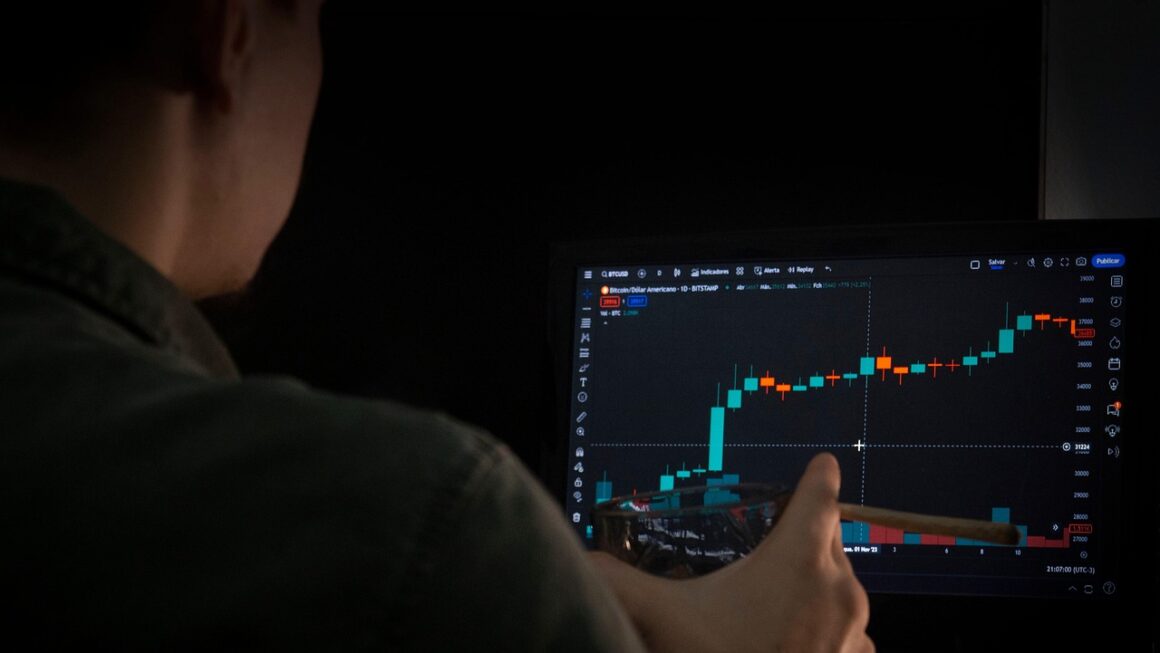
A relatively new but rapidly growing segment, cryptocurrency exchanges allow users to buy, sell, and trade digital assets like Bitcoin and Ethereum. These come in two primary forms:
- Centralized Exchanges (CEX): Operate much like traditional exchanges, holding user funds in custody and facilitating trades. Examples include Coinbase, Binance, and Kraken.
- Decentralized Exchanges (DEX): Allow peer-to-peer trading without an intermediary, often using smart contracts on a blockchain. Examples include Uniswap and PancakeSwap.
Practical Example: An individual wanting to buy Bitcoin might use Coinbase (a CEX) to convert fiat currency into crypto, or use Uniswap (a DEX) to swap Ethereum for another altcoin directly from their non-custodial wallet.
The Mechanics: How Exchanges Operate
While the assets differ, the underlying operational principles of most exchanges share common ground. They are sophisticated technological ecosystems designed for speed, security, and efficiency.
Order Books and Matching Engines
At the heart of most exchanges is the order book, a real-time list of all buy and sell orders for a particular asset, organized by price level. The matching engine is the software that automatically pairs compatible buy and sell orders.
- Bid Price: The highest price a buyer is willing to pay.
- Ask (Offer) Price: The lowest price a seller is willing to accept.
- Spread: The difference between the bid and ask price, representing the cost of immediate execution.
Types of Orders
Participants on an exchange can place various types of orders to control how and when their trades are executed.
- Market Order: An order to buy or sell immediately at the best available current price. Offers speed but not price certainty.
- Limit Order: An order to buy or sell at a specific price or better. Guarantees price but not execution.
- Practical Example: If Amazon shares are trading at $130, you could place a limit order to buy 10 shares at $128. Your order will only execute if the price drops to $128 or lower.
- Stop Order: An order to buy or sell once a particular price (the “stop price”) is reached, at which point it becomes a market order. Used to limit potential losses or protect profits.
- Stop-Limit Order: A combination of a stop order and a limit order. It becomes a limit order once the stop price is triggered.
Actionable Takeaway: Understanding order types is crucial for risk management and executing a trading strategy effectively. Using limit orders can help prevent slippage in volatile markets.
Benefits of Engaging with Exchanges
Exchanges are not just trading venues; they are vital components that offer numerous advantages to market participants and the broader economy.
Enhanced Liquidity
By centralizing buyers and sellers, exchanges create deep markets where assets can be easily converted to cash and vice-versa. This high trading volume ensures that even large orders can be executed without significantly impacting prices.
- Benefit: Reduces the risk of being unable to sell an asset when desired, or forced to accept an unfavorable price.
Price Transparency and Efficiency
The public display of bid and ask prices, along with executed trades, provides a clear, real-time view of an asset’s value. This transparency fosters fair pricing and prevents information asymmetry.
- Benefit: Investors can be confident that the price they see is generally the prevailing market price, promoting fair competition.
Regulatory Oversight and Security
Most traditional exchanges are heavily regulated by government bodies (e.g., SEC in the US, FCA in the UK). This oversight protects investors from fraud, manipulation, and ensures fair trading practices.
- Benefit: Provides a layer of trust and security, though users must still be vigilant about their own account security.
- Practical Example: Regulatory bodies frequently audit exchanges, enforce reporting requirements, and have mechanisms to investigate suspicious trading activity, aiming to maintain market integrity.
Access to Diverse Investment Opportunities
Exchanges offer access to a vast universe of assets, from individual stocks and bonds to complex derivatives and new digital assets. This diversity allows investors to build diversified portfolios tailored to their risk tolerance and financial goals.
- Benefit: Enables diversification, potentially reducing overall portfolio risk and opening doors to various growth sectors.
Choosing the Right Exchange or Platform
With so many options available, selecting the appropriate exchange or trading platform is a critical decision that can significantly impact your trading experience and investment success.
Security and Regulation
Prioritize platforms with robust security measures and clear regulatory compliance. For traditional assets, ensure the exchange is regulated by a recognized authority in your jurisdiction. For crypto, look for features like two-factor authentication (2FA), cold storage for assets, and insurance policies.
- Actionable Tip: Check if the exchange has a clean regulatory history and strong cybersecurity protocols. Research past security breaches and how they were handled.
Fees and Costs
Understand the fee structure, which can include trading fees (per trade or volume-based), deposit/withdrawal fees, and sometimes inactivity fees. These can erode profits, especially for frequent traders.
- Practical Example: Some exchanges charge a flat fee per trade, while others use a “maker-taker” model where those who add liquidity (makers) pay lower fees or even receive rebates, while those who take liquidity (takers) pay higher fees.
Supported Assets and Market Depth
Ensure the exchange offers the assets you wish to trade. For less liquid assets, check the market depth (the volume of buy/sell orders at various prices) to gauge potential slippage.
- Actionable Tip: If you plan to trade a niche altcoin, verify its availability and liquidity on your chosen crypto exchange. For traditional assets, ensure your broker offers access to the specific exchanges where your desired stocks or ETFs are listed.
User Experience and Customer Support
A user-friendly interface, comprehensive educational resources, and responsive customer support can greatly enhance your trading journey.
- Benefit: A smooth experience reduces frustration and allows you to focus on your strategy, while good support is invaluable for resolving issues promptly.
Conclusion
Exchanges are the fundamental building blocks of global finance, providing the infrastructure for capital allocation, price discovery, and wealth creation. From the venerable stock exchanges that power multinational corporations to the innovative cryptocurrency platforms shaping the future of digital assets, their role is indispensable. By understanding their diverse forms, operational mechanisms, and the myriad benefits they offer, investors and traders can make more informed decisions, navigate markets with greater confidence, and effectively participate in the dynamic world of global commerce. As technology continues to evolve, exchanges will undoubtedly adapt, becoming even more integrated, efficient, and accessible, cementing their place as the enduring heartbeats of economic progress.