The financial world is undergoing a seismic shift, driven by a revolutionary technology that promises to redefine how we transact, invest, and even interact online. Once a niche topic confined to tech enthusiasts, cryptocurrency has exploded into the mainstream consciousness, captivating investors, challenging traditional institutions, and sparking conversations from boardrooms to kitchen tables. But what exactly is this digital phenomenon, and why is it increasingly becoming a focal point of our global economy? Dive in as we unravel the complexities of cryptocurrency, explore its profound impact, and equip you with the knowledge to navigate this exciting new frontier.
What Exactly is Cryptocurrency? A Digital Revolution
At its core, cryptocurrency is a digital or virtual currency secured by cryptography, making it nearly impossible to counterfeit or double-spend. Unlike traditional currencies issued by central banks, cryptocurrencies operate on decentralized networks, typically based on blockchain technology. This decentralization is a game-changer, removing intermediaries like banks and giving users more direct control over their assets.
Blockchain Technology Explained
The backbone of almost every cryptocurrency is blockchain technology – a distributed, immutable ledger. Imagine a digital notebook where every page is a “block” containing a list of transactions. Once a page is filled, it’s sealed with a cryptographic signature and linked to the previous page, creating a “chain.” This chain is then distributed across thousands of computers (nodes) worldwide.
- Decentralized: No single entity controls the network; power is distributed among its users.
- Immutable: Once a transaction is recorded on the blockchain, it cannot be altered or deleted.
- Transparent: All transactions are publicly visible (though often pseudonymous), increasing trust and accountability.
- Secure: Cryptography protects transactions and verifies the identity of network participants.
Practical Example: When you send Bitcoin (BTC) to someone, this transaction is broadcast to the network, verified by miners (or validators), added to a block, and then permanently recorded on the blockchain. This process ensures the transaction is legitimate and irreversible.
Key Characteristics of Cryptocurrencies
Understanding these fundamental traits is crucial for grasping their disruptive potential:
- Decentralization: Operates independently of central banks and governments, reducing the risk of censorship or manipulation.
- Global Accessibility: Anyone with an internet connection can access and use cryptocurrencies, regardless of their geographical location or banking status.
- Pseudonymity: While transactions are public, the identities of users are typically protected by cryptographic addresses rather than personal names.
- Capped Supply (for many): Many cryptocurrencies, like Bitcoin (capped at 21 million BTC), have a finite supply, potentially making them a hedge against inflation.
- Programmability: Cryptocurrencies like Ethereum enable “smart contracts” – self-executing contracts with the terms of the agreement directly written into code.
Actionable Takeaway: Consider how blockchain’s inherent security and transparency could benefit industries beyond finance, from supply chain management to digital identity.
The Driving Force: Why Cryptocurrency Matters
The appeal of cryptocurrency extends far beyond its technological novelty. It addresses real-world challenges and offers compelling advantages over traditional financial systems.
Financial Inclusion
One of the most significant benefits of cryptocurrency is its potential to empower the 1.7 billion unbanked adults globally. Traditional banking often requires extensive documentation, minimum balances, and physical branches, which are inaccessible to many.
- Low Barrier to Entry: A smartphone and internet connection are often all that’s needed to start using cryptocurrency.
- Access to Financial Services: Cryptocurrencies open doors to remittances, savings, and even lending/borrowing for those excluded from traditional banking.
- Empowerment: Individuals can gain control over their finances without reliance on third-party institutions.
Practical Example: A migrant worker can send remittances to their family across borders using stablecoins (cryptocurrencies pegged to the value of a fiat currency like USD) with significantly lower fees and faster settlement times than traditional wire transfers.
Lower Transaction Costs and Faster Settlements
Traditional financial transactions, especially international ones, often come with hefty fees and can take days to clear. Cryptocurrencies streamline this process.
- Reduced Fees: Transaction fees, while varying by network congestion, are often a fraction of those charged by banks or payment processors.
- 24/7 Availability: Crypto networks operate continuously, allowing transactions to occur at any time, anywhere.
- Near-Instant Settlements: While not truly instant, most crypto transactions settle in minutes or hours, rather than days.
Tip: When sending cryptocurrency, always double-check the network fees and consider the optimal time to transact to avoid peak congestion.
Enhanced Security & Privacy
Cryptography is at the heart of cryptocurrency’s security model, protecting transactions and user data in ways traditional systems often cannot.
- Immutable Records: Once a transaction is on the blockchain, it’s permanent and tamper-proof.
- Cryptographic Security: Advanced encryption techniques safeguard assets and prevent unauthorized access.
- Pseudonymous Transactions: Users interact using public addresses, offering a degree of privacy without complete anonymity.
Actionable Takeaway: While cryptocurrency offers enhanced security, users are ultimately responsible for safeguarding their private keys and practicing good digital hygiene. This responsibility is both a benefit and a challenge.
Exploring the Crypto Landscape: Beyond Bitcoin
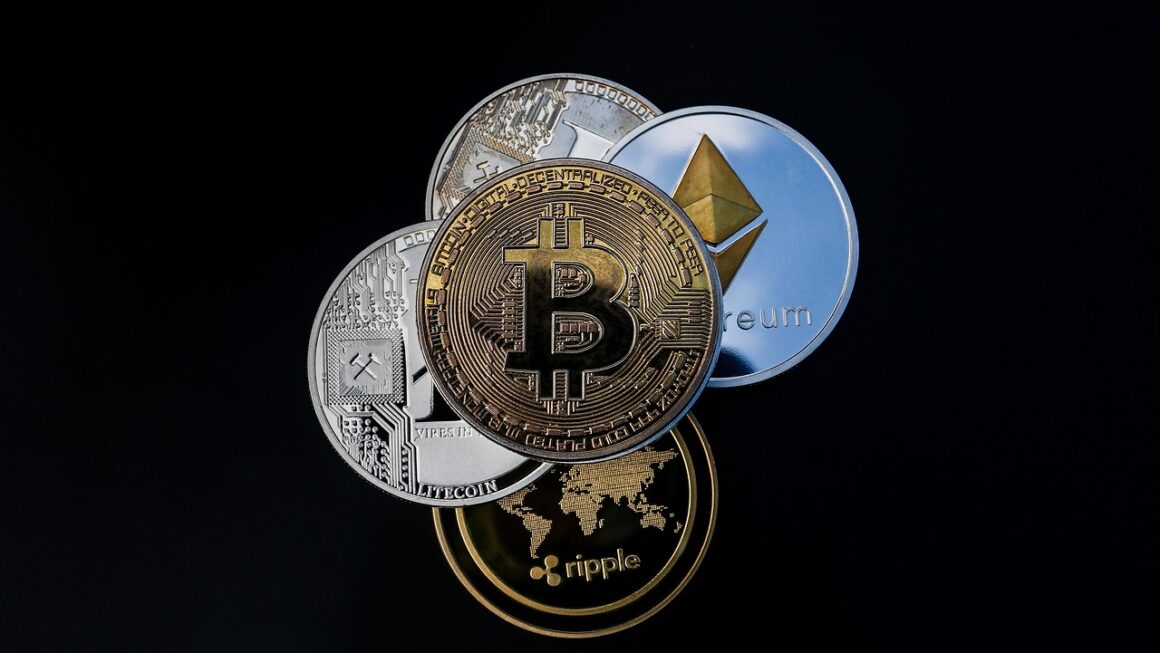
While Bitcoin (BTC) remains the largest and most well-known cryptocurrency, the ecosystem has diversified dramatically. Thousands of “altcoins” (alternative coins) offer unique functionalities, and new applications are constantly emerging.
Major Cryptocurrencies and Their Uses
Beyond Bitcoin, which is often considered “digital gold” or a store of value, here are a few other prominent players:
- Ethereum (ETH): The second-largest cryptocurrency by market cap, Ethereum introduced smart contracts and is the foundational platform for decentralized applications (dApps), DeFi, and NFTs.
- Stablecoins (e.g., USDT, USDC, BUSD): Cryptocurrencies designed to maintain a stable value, typically pegged 1:1 to fiat currencies like the US Dollar. They are crucial for traders seeking to avoid crypto volatility and for fast, cheap international payments.
- Ripple (XRP): Focuses on facilitating fast and low-cost international payments for financial institutions.
- Cardano (ADA) & Solana (SOL): “Ethereum killers” that aim to provide more scalable, efficient, and cost-effective platforms for dApps and smart contracts.
Practical Example: If you want to lend out your digital assets to earn interest without a bank, you’d likely use a DeFi protocol built on a smart contract platform like Ethereum, using stablecoins for stability.
Emerging Trends: DeFi, NFTs, and Web3
The cryptocurrency space is a hotbed of innovation, with several trends pushing the boundaries of what’s possible.
- Decentralized Finance (DeFi): A global, open alternative to every financial service we use today, from savings, loans, and trading to insurance. It’s built on blockchain technology, largely on Ethereum.
- Example: Uniswap (a decentralized exchange for token swaps), Aave (a lending and borrowing protocol).
- Non-Fungible Tokens (NFTs): Unique digital assets that represent ownership of real-world items or digital media like art, music, or collectibles. Their ownership is verifiable on a blockchain.
- Example: CryptoPunks and Bored Ape Yacht Club are famous NFT collections, demonstrating digital scarcity and ownership.
- Web3: The concept of a decentralized internet built on blockchain technology, where users have more control over their data and digital identities, moving away from centralized platforms.
- Example: Brave browser (rewards users with crypto for watching ads), play-to-earn crypto games.
Actionable Takeaway: Researching specific projects within DeFi, NFTs, or Web3 can offer insights into the practical applications and future potential of cryptocurrency beyond simple digital cash.
Navigating the Crypto Market: Risks and Rewards
While the opportunities in cryptocurrency are vast, it’s essential to approach the market with a clear understanding of its inherent risks. As with any investment, due diligence is paramount.
Volatility and Market Swings
Cryptocurrency markets are notorious for their extreme price fluctuations. A coin’s value can surge or plummet by significant percentages in a single day, influenced by news, speculation, regulatory changes, and broader market sentiment.
- High Risk, High Reward: While volatility presents opportunities for significant gains, it also carries the risk of substantial losses.
- Market Manipulation: Smaller, less liquid cryptocurrencies can be more susceptible to “pump-and-dump” schemes.
- Emotional Investing: The rapid price swings can lead to impulsive decisions, often resulting in losses.
Tip: Only invest what you can afford to lose. Avoid making emotional decisions, and consider a long-term strategy (HODLing) rather than day trading, especially as a beginner.
Regulatory Landscape and Security Concerns
The regulatory environment for cryptocurrency is still evolving, creating uncertainty and varying legal frameworks across different countries. Additionally, security breaches and scams are unfortunately common.
- Evolving Regulations: Governments are still grappling with how to classify and regulate cryptocurrencies, which can impact their adoption and legality.
- Scams and Fraud: Phishing attacks, fake ICOs (Initial Coin Offerings), pyramid schemes, and “rug pulls” are prevalent.
- Exchange Hacks: Centralized exchanges can be targets for hackers, potentially leading to the loss of user funds.
- Custody Risks: If you don’t properly secure your private keys, you could lose access to your funds forever.
Actionable Takeaway: Prioritize security. Use strong, unique passwords, enable two-factor authentication (2FA) on all accounts, and be wary of unsolicited offers or promises of guaranteed returns. Always “Do Your Own Research” (DYOR) before investing in any project.
Getting Started with Cryptocurrency: A Practical Guide
Ready to dip your toes into the world of digital assets? Here’s a practical guide to help you get started safely and effectively.
Choosing an Exchange
A cryptocurrency exchange is a platform where you can buy, sell, and trade cryptocurrencies. There are two main types:
- Centralized Exchanges (CEX):
- Pros: User-friendly interfaces, robust security features (though still vulnerable to hacks), higher liquidity, often offer fiat-to-crypto on-ramps.
- Cons: Require KYC (Know Your Customer) verification, you don’t control your private keys (funds are held by the exchange), subject to government regulations.
- Examples: Coinbase, Binance, Kraken, Gemini.
- Decentralized Exchanges (DEX):
- Pros: Non-custodial (you control your private keys), no KYC required, censorship-resistant.
- Cons: More complex to use for beginners, lower liquidity for some pairs, can be prone to higher slippage.
- Examples: Uniswap, PancakeSwap, Curve.
Tip: For beginners, a reputable centralized exchange is often the easiest entry point for purchasing your first crypto with fiat currency.
Securing Your Assets: Wallets
A cryptocurrency wallet is a digital tool that allows you to store, send, and receive cryptocurrencies. It doesn’t actually hold the coins themselves, but rather the private keys that prove ownership of your coins on the blockchain.
- Hot Wallets (Online):
- Definition: Connected to the internet (e.g., exchange wallets, mobile apps, web wallets).
- Pros: Convenient for frequent transactions, easy to set up.
- Cons: More susceptible to hacking risks.
- Examples: Exodus, Trust Wallet, MetaMask.
- Cold Wallets (Offline):
- Definition: Not connected to the internet (e.g., hardware wallets, paper wallets).
- Pros: Highly secure for long-term storage, impervious to online hacks.
- Cons: Less convenient for frequent transactions, can be lost or damaged physically.
- Examples: Ledger, Trezor (hardware wallets).
Practical Example: If you plan to hold a significant amount of cryptocurrency for the long term, investing in a hardware wallet like a Ledger Nano S or Trezor Model T is highly recommended for maximum security.
Understanding Basic Trading Concepts
Before making your first trade, familiarize yourself with basic concepts:
- Market Order: Buys or sells immediately at the current market price. Fast but price can fluctuate.
- Limit Order: Buys or sells at a specified price or better. You set your desired entry/exit point.
- Dollar-Cost Averaging (DCA): Investing a fixed amount of money at regular intervals, regardless of the asset’s price. This strategy reduces the impact of volatility and removes the need for market timing.
- Diversification: Spreading your investments across multiple cryptocurrencies to reduce risk.
Actionable Takeaway: Start with a small, manageable investment and focus on understanding the underlying technology and market dynamics. Continuous learning is key in this rapidly evolving space.
Conclusion
Cryptocurrency is undeniably more than just a passing fad; it represents a foundational shift in how we perceive and interact with value. From Bitcoin’s pioneering role in decentralized digital cash to Ethereum’s innovative smart contracts, and the burgeoning worlds of DeFi, NFTs, and Web3, these digital assets are reshaping industries, empowering the unbanked, and offering new paradigms for ownership and finance. While the journey is fraught with volatility and requires vigilance against security risks, the underlying blockchain technology offers unprecedented transparency, security, and efficiency.
As the ecosystem matures and regulations become clearer, cryptocurrency is poised to become an increasingly integrated part of our global financial and digital infrastructure. For those willing to learn, adapt, and approach with a measured perspective, understanding and engaging with cryptocurrency offers not just investment opportunities, but a front-row seat to the evolution of the internet and global commerce. The future of finance is already here, and it’s decentralized.