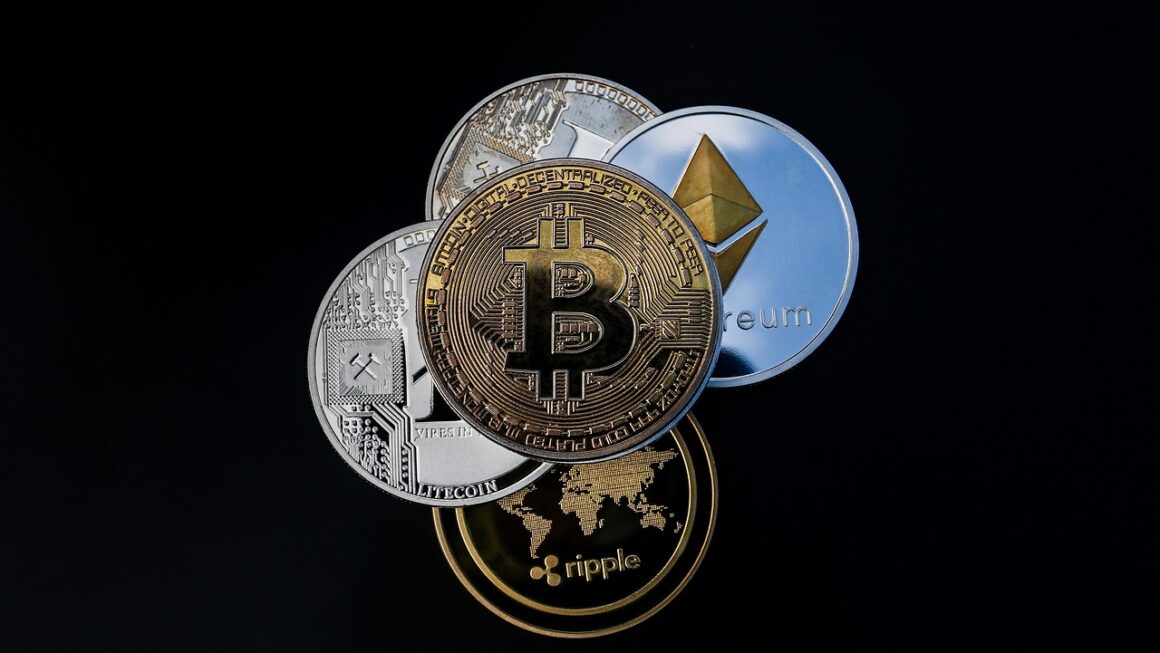
The digital age has reshaped nearly every facet of our lives, and finance is no exception. For decades, traditional exchanges have served as the gatekeepers of wealth, centralizing control and dictating terms. With the advent of cryptocurrencies, a new paradigm emerged, promising decentralization and user sovereignty. While early crypto trading often relied on centralized exchanges (CEXs) mimicking their traditional counterparts, the true spirit of blockchain innovation blossomed with the rise of Decentralized Exchanges (DEXs). These platforms are not just a technological advancement; they represent a fundamental shift towards a more transparent, secure, and user-controlled financial ecosystem, a core pillar of the evolving Web3 landscape.
What Are Decentralized Exchanges (DEXs)?
Decentralized Exchanges (DEXs) are a type of cryptocurrency exchange that allows peer-to-peer transactions to occur directly on a blockchain network without the need for an intermediary. Unlike centralized exchanges, which operate like traditional financial institutions, DEXs embody the core principles of decentralization, giving users full control over their assets.
The Foundational Principles of DEXs
- Non-Custodial: Users retain full control of their private keys and, consequently, their funds. The exchange never holds user assets.
- Peer-to-Peer Trading: Transactions occur directly between users, facilitated by smart contracts on the blockchain.
- Permissionless: Anyone with a compatible Web3 wallet can access and trade on a DEX, regardless of geographical location or identity verification (for most spot trading).
- Transparency: All transaction data (though not user identity) is recorded on a public blockchain, making operations auditable and transparent.
DEXs vs. Centralized Exchanges (CEXs): A Core Distinction
Understanding the fundamental differences between DEXs and CEXs is crucial for any crypto enthusiast. Here’s a quick breakdown:
- Asset Custody:
- DEX: Non-custodial. Users maintain custody of their funds in their personal wallets. “Not your keys, not your crypto” is the guiding principle.
- CEX: Custodial. Users deposit funds onto the exchange, which then holds them in its own wallets.
- Security Risks:
- DEX: Primarily smart contract risk (bugs/exploits) and individual user error (e.g., losing private keys). No single point of failure from a central server hack.
- CEX: Centralized server hacks, phishing attacks targeting the exchange, potential internal fraud.
- KYC/AML Requirements:
- DEX: Generally no Know Your Customer (KYC) or Anti-Money Laundering (AML) checks for basic spot trading, enhancing privacy.
- CEX: Mandatory KYC/AML procedures, requiring users to submit personal identification.
- Transaction Speed & Fees:
- DEX: Transaction speed depends on blockchain network congestion; fees are blockchain “gas fees” which can fluctuate significantly.
- CEX: Faster internal transactions; fees are typically a percentage of the trade value set by the exchange.
Actionable Takeaway: Recognize that while CEXs offer convenience, DEXs deliver true financial sovereignty and reduced counterparty risk by eliminating intermediaries. Choose based on your priorities for control, privacy, and security.
The Engine Room: How Decentralized Exchanges Function
The magic behind DEXs lies in their sophisticated use of blockchain technology, particularly smart contracts and innovative market-making mechanisms. These elements automate the trading process, ensuring security and efficiency without a central authority.
Smart Contracts: The Unseen Architect
At the heart of every DEX are smart contracts—self-executing agreements written directly into lines of code. These contracts automatically execute, control, or document legally relevant events and actions according to the terms of a contract or agreement. On a DEX, smart contracts handle:
- Order Matching: For traditional order book DEXs, they match buyers and sellers.
- Liquidity Management: For Automated Market Makers (AMMs), they govern liquidity pools.
- Token Swaps: Executing the exchange of one cryptocurrency for another.
- Fee Collection: Distributing trading fees to liquidity providers.
This automation removes the need for human intervention, reducing costs and potential for error or manipulation.
Automated Market Makers (AMMs): The Innovation Catalyst
While some early DEXs utilized traditional order books, the vast majority of modern DEXs, such as Uniswap, SushiSwap, and PancakeSwap, rely on Automated Market Makers (AMMs). AMMs revolutionized decentralized trading by moving away from the buyer-seller matching model. Instead, they use mathematical formulas and liquidity pools.
- Liquidity Pools: These are pools of two or more tokens locked in a smart contract. Users (known as Liquidity Providers, or LPs) deposit an equivalent value of both tokens into a pool. For example, an ETH/DAI pool would contain both Ethereum and DAI stablecoins.
- Pricing Algorithm: The price of tokens within the pool is determined by a constant product formula, most famously
x * y = k, wherexandyare the quantities of the two tokens in the pool, andkis a constant. When someone buys tokenywith tokenx, the supply ofxincreases andydecreases. To maintain the constantk, the price ofyeffectively rises relative tox. - Trading: When a user wants to swap tokens, they don’t trade with another person; they trade with the liquidity pool. The AMM calculates the exchange rate based on the pool’s current balance and executes the swap.
Example: If you want to swap ETH for DAI on Uniswap, you interact with an ETH/DAI liquidity pool. The smart contract calculates how much DAI you receive based on the pool’s current ratio of ETH to DAI, plus a small trading fee. This fee is then distributed proportionally to the LPs who provided the assets to the pool.
Liquidity Providers (LPs): The Backbone of AMMs
Liquidity Providers are essential to AMMs. They are individuals or entities who stake their crypto assets into liquidity pools, earning a portion of the trading fees generated by that pool. This incentivizes users to provide the capital necessary for trades to occur. LPs often participate in “yield farming” strategies to maximize their returns.
Actionable Takeaway: Familiarize yourself with how AMMs work and the role of liquidity pools. Understanding the constant product formula (even conceptually) will help you grasp pricing and potential slippage during trades.
The Unmatched Advantages of Trading on a DEX
Decentralized exchanges offer a compelling set of benefits that address many of the limitations and risks associated with centralized platforms. These advantages are fundamental to the ethos of Web3 and financial freedom.
Enhanced Security and User Control
Perhaps the most compelling advantage of DEXs is the unwavering control they offer over your assets. Since DEXs are non-custodial:
- Elimination of Custodial Risk: You never relinquish control of your private keys. This means your funds are not vulnerable to exchange hacks, solvency issues, or malicious actions by a central entity.
- No Single Point of Failure: Unlike CEXs, which can be shut down or suffer catastrophic outages, DEXs are distributed across a blockchain network, making them highly resilient.
- Reduced Counterparty Risk: You are not relying on the exchange’s solvency or integrity, as trades happen directly between your wallet and a smart contract.
Privacy and Accessibility
DEXs stand out for their commitment to user privacy and global accessibility:
- No KYC/AML Requirements: For most spot trading, DEXs do not require identity verification, preserving user anonymity. This is a significant draw for users who value privacy or live in regions with restrictive financial regulations.
- Global and Permissionless Access: Anyone with an internet connection and a compatible Web3 wallet can access a DEX from anywhere in the world, fostering financial inclusion.
Transparency and Auditability
The blockchain foundation of DEXs ensures unparalleled transparency:
- Public Record of Transactions: All trades and liquidity pool movements are recorded on the public ledger of the underlying blockchain, making them auditable by anyone.
- Algorithmic Integrity: The trading rules (e.g., AMM formulas) are embedded in immutable smart contracts, ensuring fairness and predictability, free from opaque algorithms or hidden fees.
Innovation and DeFi Integration
DEXs are at the forefront of DeFi innovation, constantly evolving and integrating with broader decentralized finance protocols:
- Early Access to New Tokens: Many new and experimental tokens are first listed on DEXs before they make their way to CEXs.
- Seamless DeFi Composability: DEXs often serve as building blocks for more complex DeFi strategies, such as yield farming, lending, and borrowing, allowing users to move assets freely between different protocols.
Actionable Takeaway: Embrace the power of self-custody and global accessibility. If privacy, security from centralized hacks, and direct control over your assets are priorities, DEXs offer a superior solution.
Navigating the Trade-offs: Challenges and Considerations
While DEXs offer revolutionary benefits, they are not without their complexities and potential pitfalls. Understanding these challenges is crucial for a safe and effective trading experience.
User Experience and Complexity
Compared to the streamlined interfaces of CEXs, DEXs can present a steeper learning curve:
- Wallet Management: Users are solely responsible for securing their private keys and managing their Web3 wallets (e.g., MetaMask). Losing access to your wallet means losing your funds.
- Gas Fees: Transactions on blockchains (especially Ethereum) incur “gas fees,” which can be expensive and fluctuate unpredictably based on network congestion. Estimating and setting appropriate gas limits can be tricky for newcomers.
- Interface Learning Curve: Connecting wallets, understanding slippage tolerance, and approving token spending can initially be confusing.
Liquidity and Slippage
The reliance on liquidity pools introduces specific challenges:
- Slippage: This occurs when the price of a crypto asset changes between the time an order is placed and when it’s executed. On DEXs, large trades, especially on less liquid pools, can significantly impact the token ratio in the pool, leading to a less favorable exchange rate than expected.
- Varying Liquidity: Different token pairs on different DEXs have varying levels of liquidity. Trading highly illiquid pairs can result in substantial slippage.
Example: If you try to swap $10,000 worth of a relatively unknown altcoin for ETH in a pool with only $50,000 total liquidity, your trade will drastically alter the pool’s ratio, causing a significant price impact and high slippage.
Smart Contract Risks
While smart contracts offer automation, they are not immune to flaws:
- Bugs and Exploits: Despite rigorous audits, vulnerabilities can exist in smart contract code, leading to exploits and loss of funds. High-profile incidents of DEX hacks (e.g., the Cream Finance exploit) highlight this risk.
- Rug Pulls: In nascent projects, developers can drain liquidity from a pool, leaving LPs with worthless tokens.
Impermanent Loss (for Liquidity Providers)
This is a unique risk for individuals providing liquidity to AMMs:
- Definition: Impermanent loss occurs when the price of your deposited assets changes compared to when you deposited them. The larger the divergence, the greater the impermanent loss. It’s “impermanent” because it only becomes real if you withdraw your funds at that moment; if prices return to their original ratio, the loss diminishes.
- How it Happens: If one token in a pair significantly outperforms the other, arbitrageurs will rebalance the pool, and LPs will end up with more of the underperforming asset and less of the outperforming asset than if they had simply held their initial tokens.
Actionable Takeaway: Approach DEXs with informed caution. Always research the specific platform and token pair, understand the potential for impermanent loss if you’re an LP, and start with smaller amounts until you’re comfortable with the mechanics.
Practical Steps to Engage with Decentralized Exchanges
Getting started with DEXs can seem daunting, but with the right knowledge and tools, you can confidently navigate this exciting ecosystem. Here are some practical steps and tips:
1. Choose Your Blockchain and DEX
The DEX landscape is vast, spanning multiple blockchains, each with its own ecosystem, fee structure, and token availability. Common choices include:
- Ethereum (e.g., Uniswap, SushiSwap, Balancer): The largest DeFi ecosystem, offering the most tokens and liquidity, but often with the highest gas fees.
- Binance Smart Chain (BSC) (e.g., PancakeSwap): Lower transaction fees and faster confirmations, popular for meme coins and alternative assets.
- Polygon (e.g., QuickSwap): A Layer 2 scaling solution for Ethereum, offering significantly lower fees and faster transactions than mainnet Ethereum.
- Solana (e.g., Raydium, Orca): Known for extremely fast transactions and very low fees.
Tip: Research which blockchain hosts the tokens you want to trade and compare the fees and liquidity of DEXs on that chain.
2. Set Up a Secure Web3 Wallet
Your Web3 wallet is your gateway to DEXs. It’s how you store your crypto and interact with decentralized applications.
- Popular Choices: MetaMask (browser extension and mobile app) is the most widely used. Hardware wallets like Ledger or Trezor offer superior security when paired with MetaMask.
- Seed Phrase Security: Your 12 or 24-word seed phrase is the master key to your funds. Write it down, store it offline in multiple secure locations, and never share it with anyone.
- Connect Your Wallet: Most DEXs will have a “Connect Wallet” button. Simply click it and approve the connection from your wallet.
3. Fund Your Wallet
To trade on a DEX, you need funds in your Web3 wallet. You can typically:
- Transfer from a CEX: Buy crypto on a centralized exchange (e.g., Coinbase, Binance) and then withdraw it to your Web3 wallet address. Ensure the network matches (e.g., send ETH on the Ethereum network to your MetaMask Ethereum address).
- Direct Purchase: Some wallets offer direct fiat-to-crypto purchases, though often with higher fees.
4. Understand Gas Fees and Slippage Tolerance
- Gas Fees: These are transaction costs paid to network validators. They vary based on network congestion. Use tools like Etherscan’s Gas Tracker (for Ethereum) or similar for other chains to estimate current fees. You can adjust gas limits and prices in your wallet (e.g., “Edit Gas” on MetaMask) to potentially speed up or save on transactions, but setting them too low can cause transactions to fail.
- Slippage Tolerance: This is the maximum percentage price change you’re willing to accept for your trade. It’s usually set between 0.5% and 1%. If the price moves beyond your tolerance, the transaction will fail. For volatile assets or illiquid pools, you might need to increase it, but be mindful of potential losses.
5. Prioritize Security Best Practices
- Double-Check Addresses: Always verify the contract address of the token you’re trading and the recipient address if sending funds. Scammers often use similar-looking addresses.
- Revoke Token Approvals: When you trade on a DEX, you typically “approve” the smart contract to spend a certain amount of your tokens. Regularly review and revoke unnecessary or expired approvals using tools like Etherscan’s Token Approvals page.
- Beware of Phishing: Only interact with official DEX websites. Bookmark them and be wary of suspicious links or messages.
Actionable Takeaway: Start small, learn continuously, and prioritize security. Practice with small amounts of capital until you are fully comfortable with the processes of wallet management, gas fees, and trade execution on your chosen DEX.
Conclusion
Decentralized exchanges represent a pivotal shift in the financial landscape, empowering individuals with unprecedented control, privacy, and access to a global marketplace. By eliminating intermediaries and leveraging the immutable power of smart contracts, DEXs embody the true spirit of decentralization that blockchain technology promised. While challenges such as user experience complexity, gas fees, and smart contract risks persist, the continuous innovation within the DeFi space is rapidly addressing these concerns, making DEXs more user-friendly and robust.
As the Web3 era unfolds, decentralized exchanges are not just a niche platform for crypto enthusiasts; they are foundational pillars enabling a more open, transparent, and equitable financial future. Embracing DEXs means stepping into a world where financial sovereignty is paramount, where you are the sole guardian of your assets, and where participation is permissionless. For anyone looking to truly engage with the decentralized economy, understanding and utilizing DEXs is no longer optional—it’s essential for navigating the future of finance.