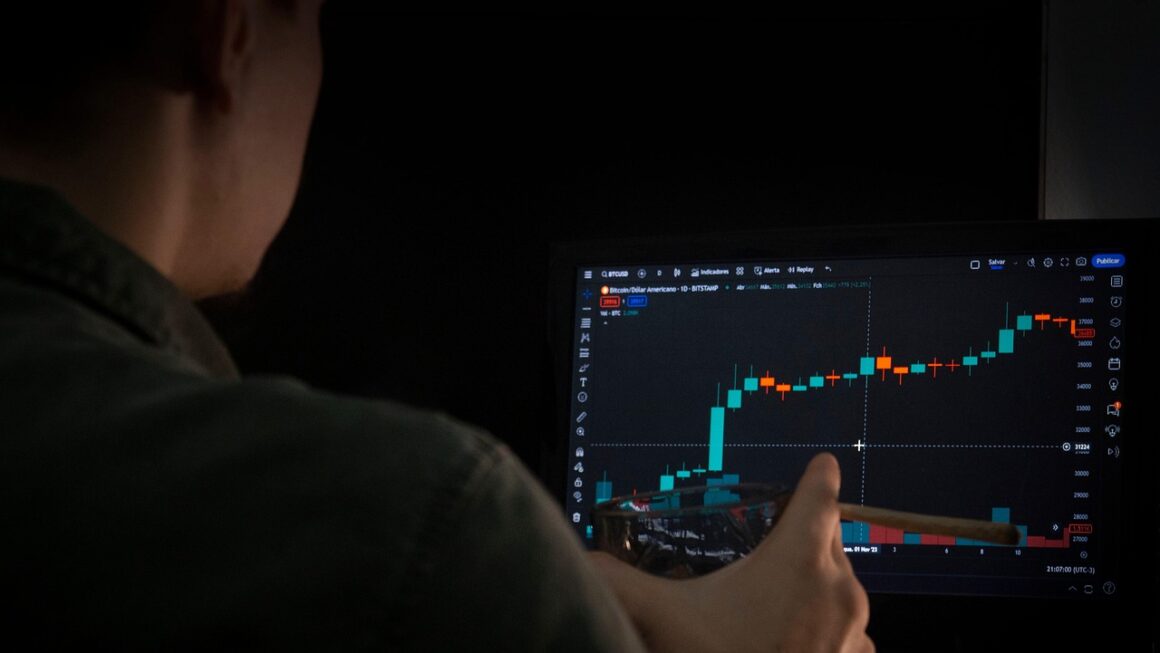
The world of finance is undergoing a silent yet profound revolution, driven by the principles of decentralization and user empowerment. At the forefront of this movement are decentralized exchanges (DEXs), platforms that are fundamentally reshaping how we buy, sell, and trade cryptocurrencies. Moving beyond the traditional, centralized gatekeepers, DEXs offer a glimpse into the future of Web3 – a future built on transparency, autonomy, and peer-to-peer interactions. If you’re ready to dive deeper into the backbone of decentralized finance (DeFi), understand its mechanics, and discover why DEXs are becoming indispensable for crypto enthusiasts, then you’ve come to the right place.
What Are Decentralized Exchanges (DEXs)?
Decentralized Exchanges (DEXs) are peer-to-peer marketplaces where cryptocurrency transactions occur directly between users without the need for an intermediary. Unlike traditional centralized exchanges (CEXs) like Coinbase or Binance, DEXs operate on blockchain technology, governed by smart contracts and eliminating the need for a central authority to hold user funds or facilitate trades.
The Core Philosophy: Self-Custody and Trustlessness
- No Central Intermediary: DEXs remove the “middleman.” All trades are executed directly between the wallets of buyers and sellers.
- Self-Custody of Funds: Users retain full control over their private keys and, consequently, their assets. Funds are never held by the exchange itself, significantly reducing the risk of hacks or seizures.
- Trustless Environment: The integrity of transactions is ensured by immutable smart contracts on the blockchain, rather than reliance on a company’s trustworthiness.
- Permissionless Access: Anyone with an internet connection and a compatible crypto wallet can access a DEX, regardless of geographic location or identity.
DEX vs. CEX: A Fundamental Shift
Understanding DEXs becomes clearer when contrasted with their centralized counterparts:
- Custody:
- CEX: Custodial – the exchange holds your assets. “Not your keys, not your coin.”
- DEX: Non-custodial – you hold your assets in your personal wallet.
- KYC/AML:
- CEX: Mandatory Know Your Customer (KYC) and Anti-Money Laundering (AML) checks, requiring personal information.
- DEX: Generally no KYC/AML, offering greater privacy.
- Security Risks:
- CEX: High risk of centralized hacks (Mt. Gox, FTX) where user funds are lost.
- DEX: Risks primarily relate to smart contract vulnerabilities or user error in wallet management.
- Transaction Speed & Fees:
- CEX: Often faster, lower trading fees, but withdrawal fees can vary.
- DEX: Transaction speed depends on blockchain congestion; gas fees (network transaction fees) can be variable and sometimes high.
Actionable Takeaway: Evaluate your priorities – if security and control over your assets are paramount, DEXs offer a superior solution compared to the convenience often touted by CEXs. Always consider the trade-offs.
The Advantages of Trading on a DEX
The rise of DEXs isn’t just a technical shift; it represents a philosophical stand for individual financial sovereignty. They offer distinct advantages that appeal to a growing segment of the crypto community.
Enhanced Security and Self-Custody
One of the most compelling reasons to use a DEX is the inherent security model:
- Elimination of Counterparty Risk: You don’t trust an exchange with your funds. Your assets remain in your personal wallet until the transaction is confirmed on the blockchain. This significantly reduces the risk of exchange insolvency or hacking.
- Reduced Single Point of Failure: Centralized exchanges are attractive targets for hackers due to the vast amounts of user funds they control. DEXs, by distributing control and custody, mitigate this single point of failure.
- Private Key Control: You are the sole custodian of your private keys, meaning you have complete control over your digital assets. This empowers users and aligns with the core ethos of cryptocurrency.
Practical Example: In 2022, the collapse of FTX led to billions in user losses because the exchange held customer funds. On a DEX, such a scenario is virtually impossible, as your assets would never be directly held by the platform.
Privacy and Anonymity
For many, the privacy offered by DEXs is a significant draw:
- No KYC/AML Requirements: Most DEXs do not require users to submit personal identification documents, allowing for more private trading. This contrasts sharply with CEXs, which enforce strict regulatory compliance.
- Pseudonymous Transactions: Transactions on a DEX are linked to your public wallet address, which is pseudonymous rather than directly tied to your real-world identity.
Greater Transparency and Censorship Resistance
DEXs embody the transparent and immutable nature of blockchain:
- On-Chain Transparency: All transactions and liquidity pool data are publicly visible on the blockchain, providing an unparalleled level of transparency in market activity.
- Resistance to Censorship: As there’s no central authority to approve or deny trades, DEXs are inherently more resistant to censorship or government interference. Anyone can participate as long as they can connect to the blockchain network.
Access to a Wider Range of Digital Assets
- Long Tail of Crypto: DEXs often list new or smaller tokens much earlier than CEXs, providing opportunities for early investment in emerging projects.
- Immediate Listing: Projects can often list their tokens on a DEX (especially AMMs) simply by providing liquidity, without needing permission or paying hefty listing fees.
Actionable Takeaway: When considering privacy and control, DEXs offer a compelling alternative to centralized platforms. However, remember that with greater control comes greater responsibility for securing your own assets.
Types of Decentralized Exchanges
The DEX ecosystem is diverse, with different models catering to various trading styles and liquidity provision mechanisms. Understanding these types is crucial for choosing the right platform.
1. Order Book DEXs
These DEXs mimic the traditional exchange model, using an order book where buyers and sellers place limit or market orders. They can be further categorized:
- On-Chain Order Books: Every order, cancellation, and trade is recorded on the blockchain.
- Pros: Maximum transparency and decentralization.
- Cons: Can be slow and expensive due to high gas fees for every interaction (placing/canceling orders).
- Example: Very few purely on-chain order books remain popular due to scalability issues.
- Off-Chain Order Books with On-Chain Settlement: Orders are managed off-chain (e.g., by a relayer) but settled on the blockchain.
- Pros: Faster trading, lower gas fees for order placement/cancellation.
- Cons: Introduces a slight degree of centralization through the relayer.
- Example: dYdX (though increasingly moving towards a custom L2 chain, still rooted in this model for perpetuals), Loopring (an L2 DEX with an off-chain order book).
2. Automated Market Makers (AMMs)
AMMs revolutionized DEXs by replacing traditional order books with liquidity pools and mathematical algorithms (smart contracts) to determine asset prices. This is the dominant model for spot trading on DEXs.
- Liquidity Pools: Users (liquidity providers, LPs) deposit pairs of tokens into a shared pool (e.g., ETH/USDC). These pools create a market for those token pairs.
- Constant Product Formula: Most AMMs use a formula like
x * y = k, wherexandyare the quantities of the two tokens in the pool, andkis a constant. This formula ensures that when one token is bought, the price of that token increases relative to the other. - Trading: When a user wants to trade, they swap one token for another directly from the liquidity pool, paying a small trading fee that goes to the LPs.
- Impermanent Loss: LPs face the risk of impermanent loss, which is the temporary loss of funds due to price divergence of the pooled assets.
- Examples: Uniswap (Ethereum’s pioneering AMM), PancakeSwap (Binance Smart Chain), SushiSwap (multi-chain).
Practical Tip: If you’re providing liquidity to an AMM, use tools like APY.vision or DeFi Llama to track your potential impermanent loss and optimize your LP positions.
3. DEX Aggregators
DEX aggregators are smart routing platforms that pull liquidity from various DEXs to find the best possible trading prices for users.
- Optimized Swaps: They split orders across multiple DEXs or route through various token pairs to minimize slippage and gas fees, ensuring users get the most efficient trade.
- User Convenience: Simplifies the trading process by eliminating the need for users to manually check prices across different DEXs.
- Examples: 1inch Network, Matcha, ParaSwap.
Actionable Takeaway: For simple spot swaps, AMMs are often the easiest entry point. For larger trades or to ensure you’re getting the best price, DEX aggregators are invaluable. If you require advanced trading features like limit orders, an Order Book DEX might be more suitable, often on Layer 2 solutions for better performance.
Navigating the DEX Ecosystem: Practical Considerations
While DEXs offer unparalleled benefits, they also come with a unique set of challenges and require a mindful approach to ensure a secure and efficient trading experience. Understanding these practical aspects is key to becoming a confident DEX user.
Connecting Your Wallet: Your Gateway to DeFi
Your crypto wallet is your identity and bank account in the decentralized world. Connecting it correctly is the first step:
- Popular Wallets: The most common browser extension wallet is MetaMask. Other popular options include Trust Wallet (mobile), Ledger (hardware wallet for maximum security), or Phantom (for Solana-based DEXs).
- Connection Process: Visit the DEX website, click “Connect Wallet,” and select your wallet provider. Approve the connection request within your wallet.
- Security Precaution: Always double-check the URL of the DEX before connecting your wallet to avoid phishing scams.
Practical Tip: For significant funds, always use a hardware wallet like Ledger or Trezor, connected via MetaMask. This adds an extra layer of physical security to your transactions.
Understanding Liquidity Pools and Slippage
Especially prevalent on AMM-based DEXs, these concepts are crucial:
- Liquidity: The depth of a pool (how many tokens it contains). High liquidity generally means less price impact for larger trades.
- Slippage: The difference between the expected price of a trade and the price at which the trade is executed. It occurs when market conditions change between the time an order is placed and when it’s executed, or simply due to insufficient liquidity.
- Causes: Low liquidity pools, large trade sizes relative to the pool, or high network congestion.
- Mitigation: Set a “slippage tolerance” in your DEX settings (e.g., 0.5% – 1%). Be careful setting it too high, as it could lead to you getting a much worse price than anticipated.
Actionable Takeaway: Before a significant trade, check the liquidity of the token pair on the DEX. Adjust your slippage tolerance carefully, understanding the trade-off between transaction success and price certainty. For large swaps, consider splitting your trade into smaller chunks or using a DEX aggregator.
Gas Fees: The Cost of Decentralization
Transactions on DEXs require network fees, commonly known as “gas fees”:
- Purpose: Gas fees compensate validators for processing and securing transactions on the blockchain.
- Variability: Fees fluctuate based on network demand and congestion. Ethereum, being a highly utilized chain, often has higher gas fees.
- Different Chains: Fees vary significantly across different blockchain networks. Trading on Solana, Polygon, or Binance Smart Chain generally incurs much lower gas fees compared to Ethereum mainnet.
Practical Tip: Use tools like Etherscan Gas Tracker (for Ethereum) or equivalent trackers for other chains to monitor real-time gas prices and time your transactions for periods of lower network congestion.
Security Best Practices in the DEX Ecosystem
While DEXs offer self-custody, users must be vigilant:
- Wallet Security:
- Never share your seed phrase.
- Use strong passwords for non-hardware wallets.
- Enable two-factor authentication (if available on your wallet provider).
- Smart Contract Audits: Only interact with DEXs and liquidity pools from reputable projects whose smart contracts have been thoroughly audited by professional security firms.
- Phishing Awareness: Always verify the URL of the DEX. Bookmark legitimate sites and avoid clicking suspicious links.
- Revoke Approvals: Regularly review and revoke token approvals you’ve granted to smart contracts you no longer use, as a compromised contract could potentially access approved tokens. Tools like revoke.cash can help.
Actionable Takeaway: Your security on a DEX is primarily your responsibility. Educate yourself, practice good digital hygiene, and verify everything. “Do Your Own Research (DYOR)” is not just a mantra, it’s a necessity.
The Future of Decentralized Exchanges
The DEX landscape is rapidly evolving, driven by innovation to address current limitations and expand capabilities. The future promises more efficient, user-friendly, and interconnected decentralized trading experiences.
Scalability Solutions and Layer 2s
High gas fees and slow transaction speeds have been significant hurdles, especially on Ethereum mainnet. Layer 2 (L2) scaling solutions are the answer:
- Optimistic Rollups (e.g., Optimism, Arbitrum): Process transactions off-chain and then batch them into a single transaction on the mainnet, significantly reducing costs and increasing speed.
- ZK-Rollups (e.g., zkSync, StarkNet): Use cryptographic proofs to validate transactions off-chain, offering superior security and finality.
- Sidechains (e.g., Polygon, BNB Chain): Separate blockchains compatible with Ethereum, offering their own consensus mechanisms and lower fees.
Impact: These solutions are making DEX trading more accessible and efficient for everyday users, driving increased adoption and liquidity.
Improved User Experience (UX)
Early DEXs were often clunky and intimidating for new users. The focus is now shifting towards ease of use:
- Intuitive Interfaces: Simpler, more familiar designs that mirror traditional finance platforms.
- “Gasless” Transactions: Innovations allowing users to pay gas fees in the token they are trading, or abstracting away the concept of gas entirely for a smoother experience.
- Mobile-First Development: Better integration with mobile wallets and dedicated DEX mobile apps.
Cross-Chain Functionality and Interoperability
The crypto ecosystem is multi-chain, but moving assets between different blockchains can be complex. Future DEXs will increasingly offer seamless cross-chain swaps:
- Bridge Integrations: Direct integration of secure bridging solutions within DEX interfaces.
- Native Cross-Chain DEXs: Emerging protocols designed to facilitate swaps directly across different blockchains without needing intermediate bridges.
- Example: Projects like Thorchain are building truly decentralized cross-chain liquidity networks.
Integration with Traditional Finance (TradFi)
While fundamentally decentralized, there’s a growing bridge between DeFi and TradFi:
- Tokenized Real-World Assets (RWAs): The ability to trade tokenized stocks, real estate, or commodities on DEXs.
- Institutional Adoption: More institutions are exploring DeFi for yield generation, lending, and trading, potentially bringing significant liquidity and legitimacy to DEXs.
Actionable Takeaway: Stay informed about new Layer 2 developments and cross-chain solutions. These innovations will fundamentally improve the speed, cost, and reach of decentralized trading, making it a more viable alternative for a broader audience.
Conclusion
Decentralized exchanges are more than just platforms for trading cryptocurrencies; they are a cornerstone of the burgeoning Web3 economy and a powerful testament to the principles of decentralization, transparency, and individual sovereignty. By offering self-custody, enhanced privacy, and resistance to censorship, DEXs provide a compelling alternative to their centralized counterparts.
While navigating the DEX ecosystem requires a deeper understanding of concepts like smart contracts, liquidity pools, and gas fees, the benefits of true financial autonomy are undeniable. As the technology matures with scalable Layer 2 solutions, improved user interfaces, and seamless cross-chain capabilities, DEXs are poised to become an even more integral part of our financial future. Embrace the power of decentralized trading and take control of your digital assets – the future of finance is here, and it’s decentralized.